Is Cash an Asset? The Ultimate Guide to Understanding Cash in Your Business
On this page 19 sections

You're staring at your accounting software. Profit shows ₹2 lakhs for the month. Your bank balance? ₹47,000.
Something doesn't add up, and honestly, this confusion has torpedoed more startups than bad products ever have.
Here's the straight answer: Yes, cash is an asset—specifically, a current asset.
It's an economic resource your business owns that provides immediate value. But knowing that doesn't solve the real problem: understanding why your profitable business is still running out of money.
By the end of this guide, you'll understand exactly where cash sits in your financial statements, why it's different from profit, and how to avoid the liquidity mistakes that kill 78% of early-stage businesses (per CB Insights 2023 data).
The Pre-Flight Check: What You Need Before Diving In
Before we get into the mechanics, verify you have:
- Access to your balance sheet (even a basic one from QuickBooks or Excel)
- Your last 3 months of bank statements
- A clear picture of outstanding invoices
Stop/Go Test: Can you state your current cash position right now, within ₹10,000? If not, pause—you need to reconcile your books first before understanding classification theory.
Why Cash Is Classified as an Asset (The Foundation)
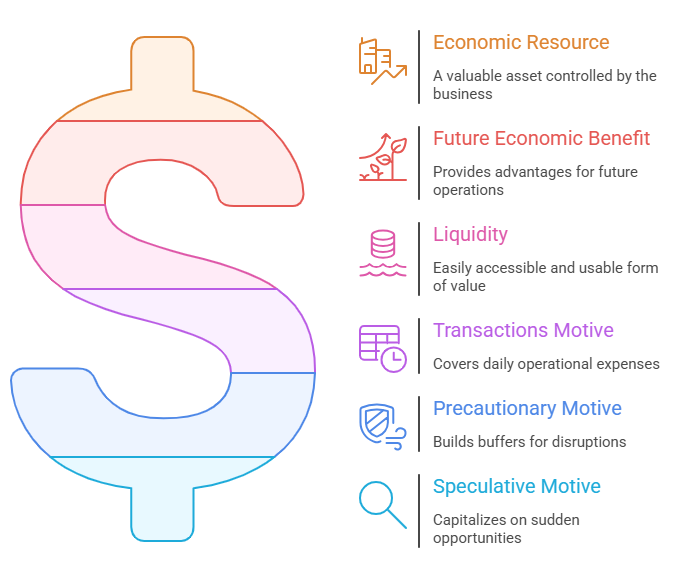
Cash is an asset because it meets the fundamental definition established by accounting standards: it's an economic resource controlled by your business that provides future economic benefit.
Think about it practically. Cash lets you:
- Pay immediate obligations without waiting for approvals or conversions
- Seize opportunities when suppliers offer bulk discounts
- Survive disruptions when clients delay payments
The liquidity aspect is what makes cash special. Unlike inventory (which you must sell) or receivables (which you must collect), cash is already in its most useful form.
The Three Motives for Holding Cash
Professional accountants recognize three reasons businesses hold cash:
- Transactions motive: Covering daily operations like payroll and rent
- Precautionary motive: Building buffers for supply chain disruptions or seasonal dips
- Speculative motive: Capitalizing on sudden opportunities (less common for SMBs)
In 2026, with UPI enabling instant settlements and subscription tools auto-debiting weekly, the transactions motive dominates. Businesses monitor cash position weekly, not just at month-end like the old quarterly reporting mindset.
Cash as a Current Asset: The Classification Rules
Here's where bookkeeping gets specific. Cash isn't just any asset—it's a current asset, which means it's expected to be used or converted within one year.
More importantly, cash is the most liquid current asset. On any properly structured balance sheet, cash appears first under current assets. This isn't arbitrary—it follows the liquidity order principle under GAAP.
Visual Checkpoint: Open your accounting software. Navigate to the balance sheet. You should see "Cash" or "Cash and Cash Equivalents" as the very first line item under Current Assets, often with a green "Reconciled" indicator if you're using cloud tools with bank feeds.
Where Cash Appears in Financial Statements
Cash shows up in two critical places:
The Balance Sheet: Under current assets, cash shown on the balance sheet represents your snapshot liquidity at a specific date. This includes:
- Petty cash (physical currency in your office safe)
- Demand deposits (checking/savings accounts)
- Cash in transit (payment gateway balances awaiting settlement)
The Statement of Cash Flows: This reconciles your operating income to actual cash movement. Negative operating cash flows for two consecutive quarters is a red flag—it means your core business is bleeding cash regardless of what the P&L shows.
Verification Check: Pull your last month's balance sheet. Manually reconcile the cash figure against your actual bank statement balance. If the variance exceeds 1%, stop—you have dirty data from unreconciled transactions.
The Ugly Truth: Cash vs. Profit (Where Founders Get Wrecked)
This is where theory crashes into survival reality. I've seen founders celebrate profitable months while simultaneously unable to make payroll. The culprit? Accrual accounting vs. cash reality.
How the Mismatch Happens
Example 1 - Service Business:
You invoice a client ₹1 lakh on March 25th for consulting work. Under accrual accounting, you book ₹1 lakh revenue in March. Your operating income looks healthy. But the client pays Net-30 terms. The actual cash hits your bank on April 28th. In March, you showed profit but had zero cash to pay your freelancer who delivered the work.
Example 2 - Retail Business:
You run a small electronics shop. You sell ₹50,000 worth of phones via cash/UPI on the same day you purchase inventory. Here, revenue = cash immediately. Your asset (cash) increases the moment the transaction completes.
The difference? Timing and payment terms.
The Real Numbers
According to widely accepted small business research, cash flow problems kill businesses far more often than lack of profitability. The SCORE data consistently shows founders confuse these two metrics until it's too late.
In 2026's subscription-heavy environment, this gets worse. You're paying for software tools monthly (immediate cash out) while clients pay you in 45-day cycles (delayed cash in). Operating income doesn't equal available cash—ever.
Clean Up Your Cash Tracking
Most founders realize too late that profit is an accounting number, but cash is the survival number. ProfitBooks helps you track real cash position separately from accrual-based profit, so you're never surprised by a "profitable" month that leaves you unable to pay rent.
Cash vs. Cash Equivalents: The Subtle Distinction
Not everything that looks like cash gets classified as cash.
Pure Cash includes:
- Physical currency (petty cash)
- Bank account balances (demand deposits)
- Undeposited funds
Cash Equivalents are:
- Treasury bills maturing within 90 days
- Money market funds
- Commercial paper under 3-month maturity
The 90-day rule is critical. If you lock money in a 6-month fixed deposit, it's no longer a cash equivalent—it becomes a short-term investment classified separately.
Why this matters for your quick ratio: Quick ratio = (Cash + Cash Equivalents) / Current Liabilities. If you misclassify a 6-month FD as cash equivalent, you're inflating your liquidity position. Auditors flag this, and worse, you might make spending decisions based on fake liquidity.
Assets vs. Liabilities: Understanding the Balance
Cash is an asset. The opposite side of your balance sheet contains liabilities—amounts you owe.
The fundamental accounting equation:
Assets = Liabilities + Equity
When you receive cash from a customer, assets (cash) increase.
When you take a loan, assets (cash) increase and liabilities (loan payable) increase equally.
The difference between assets and liabilities determines your net worth.
Practical checkpoint: If your current assets (including cash) are less than current liabilities, you have a working capital problem. This means you can't cover short-term obligations with liquid resources—a solvency warning sign.
Other Current Assets That Interact with Cash
Cash doesn't exist in isolation. It flows between other current assets constantly:
- Accounts Receivable: Invoices that convert into cash once clients pay. In 2026, with real-time payment tracking, you should know your average collection period (typically 30-45 days for Indian SMBs).
- Inventory: You spend cash to buy inventory, then convert inventory back to cash through sales. The faster this cycle, the better your cash conversion cycle.
- Prepaid Expenses: You pay cash upfront (annual software subscription), but it's classified as a prepaid asset that gets expensed monthly.
Visual Checkpoint: Your balance sheet should show cash decreasing when receivables increase (you made a credit sale) or when inventory increases (you purchased stock). These movements balance each other.
Common Mistakes That Wreck Cash Tracking
After seeing hundreds of small business books, these errors repeat constantly:
❌ Thinking revenue equals cash: You booked ₹5 lakhs in sales, but ₹3 lakhs is still in receivables. Your cash didn't increase by ₹5 lakhs.
❌ Ignoring receivables aging: That ₹50,000 invoice from 90 days ago? It's not cash. It might never become cash if the client ghosts you.
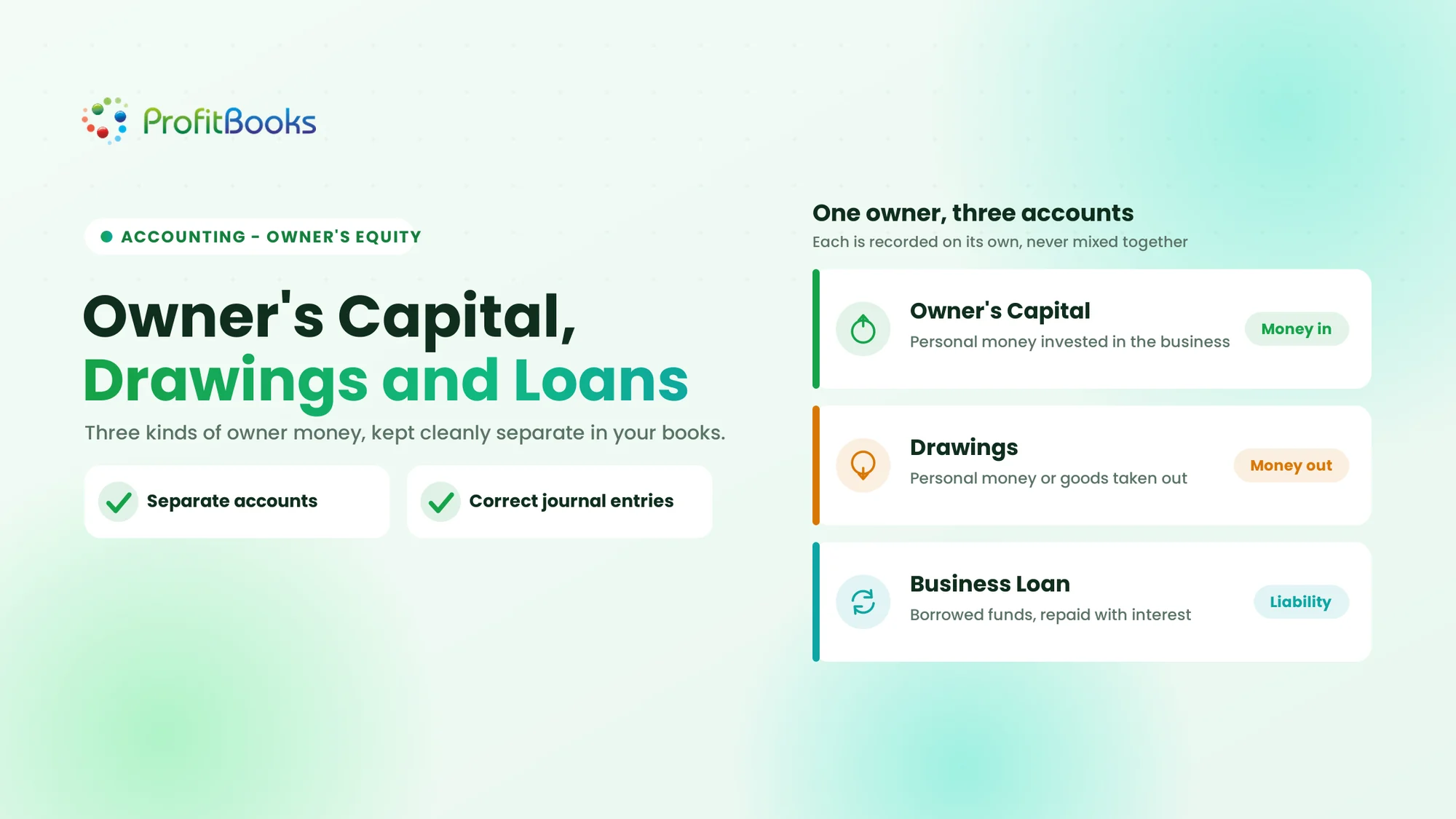
❌ Mixing personal and business cash: You transferred ₹20,000 from your personal account to cover payroll. That's not business cash—it's owner equity injection. Mixing these triggers IRS/GST audit flags.
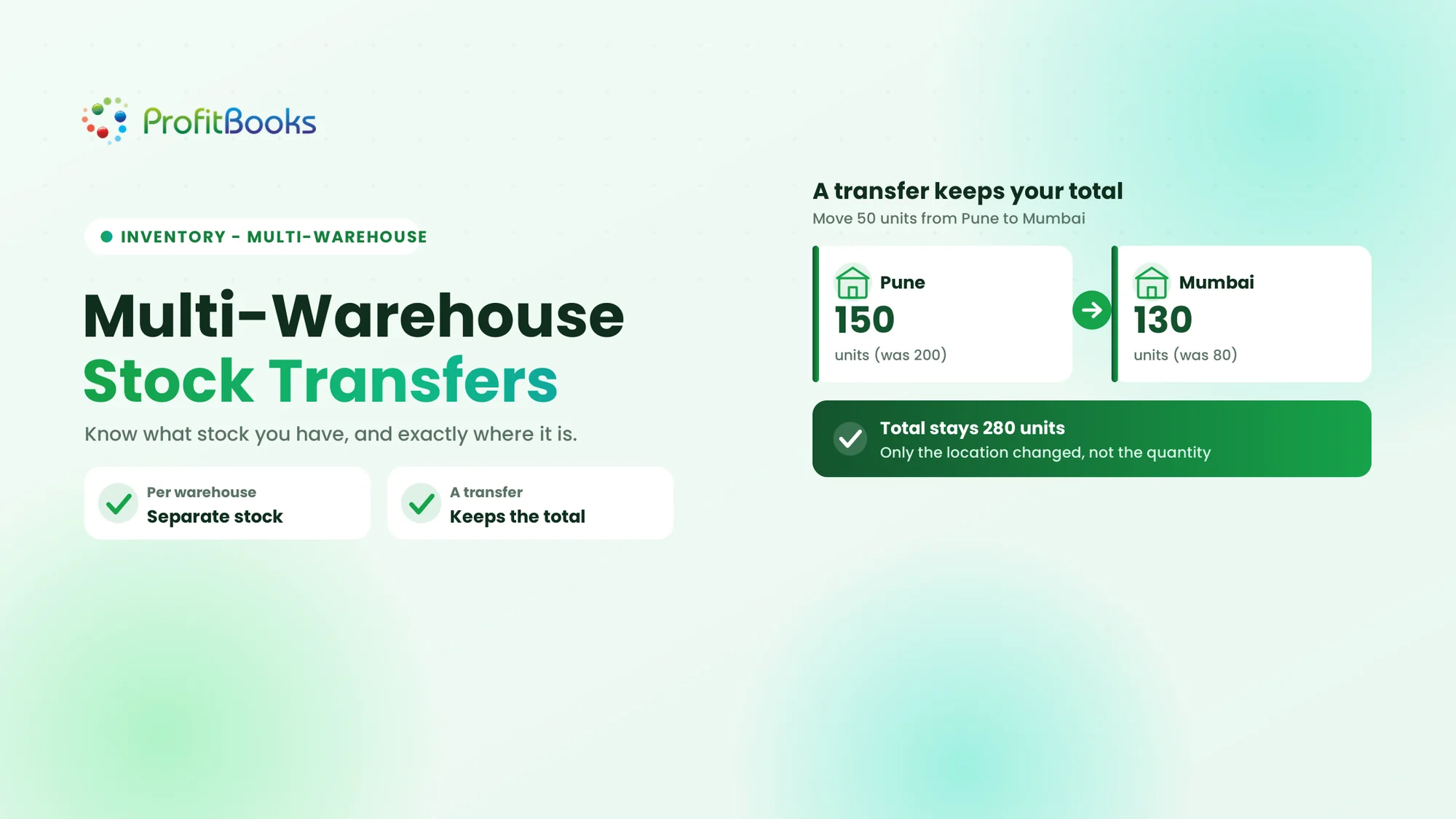
❌ Not tracking multi-location cash: You have cash in your bank account, ₹5,000 in petty cash, and ₹12,000 stuck in your payment gateway settlement account. You need sub-ledgers tracking each location separately.
❌ Ignoring cash timing: Your Razorpay settlements take T+2 days. That ₹30,000 sale on Monday isn't cash until Wednesday. In a tight cash week, this kills you.

The 2026 Cash Reality: What's Changed
The fundamentals haven't changed, but the execution has:
- Real-time bank sync tools (Plaid, Yodlee integrations) mean you can see cash position live, not wait for month-end reconciliation.
- UPI and instant settlements compress the cash conversion cycle.
- B2C businesses now expect same-day cash from sales, making working capital management tighter.
- Subscription expense models create predictable cash outflows. You're paying for 8-12 SaaS tools monthly, creating a fixed cash burn regardless of revenue.
- Weekly liquidity tracking replaces the old quarterly mindset. Founders check cash runway every Monday, not just during board meetings.
The practical implication? You need daily cash visibility, not monthly reporting. If you're still reconciling cash position manually at month-end, you're flying blind for 29 days.
Ghost Errors: The Weird Fixes From the Trenches
These aren't in textbooks, but they're real:
| Problem | Root Cause | The Weird Fix |
|---|---|---|
| Cash won't reconcile despite matching statements | Uncleared checks from 6 months ago still in ledger | Print physical bank statements and manually clear stale entries |
| Quick ratio looks great but you can't pay bills | Restricted cash (FD against bank guarantee) counted as liquid | Reclassify to "Restricted Cash - Non-Current" and footnote separately |
| Negative operating cash flow despite profit | Massive receivables buildup | Run aging report; write off uncollectible >90 days; tighten credit terms |
| Petty cash never balances | No imprest system; people "borrowing" without receipts | Implement zero-balance monthly close with physical receipt matching |
These come from practitioner forums and real accounting cleanup projects—not official guidance.
Timeline Reality: When You'll See Results
- Cash classification setup: Immediate (one-time chart of accounts cleanup)
- Clean reconciliation process: 2-4 weeks to establish rhythm
- Accurate cash forecasting: 3 months of clean data needed to predict patterns
- Positive cash flow from operations: 6-12 months for most startups to flip from cash-burning to cash-generating
Don't expect instant fixes. Cash management is a discipline, not a hack.
FAQ: Implementation-Focused Answers
How do I fix cash showing negative on my balance sheet?
Reconcile bank feeds immediately and reverse any uncleared checks or duplicate entries. Negative cash usually means data entry errors, not actual overdrafts.
Why doesn't my cash balance match my bank statement?
Timing differences (outstanding checks, deposits in transit) or unreconciled payment gateway settlements. Run a bank reconciliation report to identify the gap.
How long should I keep cash reserves?
Target 3-6 months of operating expenses. Bootstrapped startups aim for 6+ months; VC-backed can run tighter at 12-18 months runway.
Can I count my personal savings as business cash?
No. Personal assets aren't business assets unless you formally inject them as equity or loans. Keeping them separate protects limited liability.
What's the difference between cash flow and profit?
Profit is accrual-based (revenue when earned, expenses when incurred). Cash flow is actual money movement. You can be profitable and cash-starved simultaneously.
How often should I check my cash position in 2026?
Weekly minimum. Daily if you're in a tight cash situation or scaling rapidly. Monthly is too slow for modern business velocity.
Should I invest excess cash or keep it liquid?
Keep 3 months in pure cash (demand deposits). Invest 3-6 month buffer in cash equivalents (90-day instruments). Never lock up your emergency fund in illiquid investments.
The Bottom Line
Cash is absolutely an asset—the most important one you have. It's classified as a current asset, appears first on your balance sheet, and determines whether you survive the next 90 days.
But classification alone doesn't help you. Understanding the cash vs. profit gap, tracking liquidity weekly, and avoiding the common mistakes that drain cash invisibly—that's what keeps your business alive.
In 2026, you need real-time visibility into cash position, not month-end surprises. Whether you're using spreadsheets or dedicated tools, the discipline of daily cash awareness beats sophisticated accounting theory every time.
Track your cash like your business depends on it. Because it does.

Modern Accounting for Growing Teams
Automate your invoicing, track expenses in real-time, and stay compliant with ease. Experience the software designed to make financial management effortless.