
How Small Businesses Should Manage Accounting Daily (Simple Workflow Guide)

How Small Businesses Should Manage Accounting Daily (Simple Workflow Guide)

How should small businesses manage accounting daily? Small businesses should record transactions daily, track expenses, reconcile accounts regularly, and review reports to maintain accurate financial records. A consistent routine—even 20 minutes at end of day—prevents the backlog that turns tax season into a nightmare. Daily Accounting Workflow at a Glance: Record all sales and income…

Details
Must-Have Features in Accounting Software for Small Businesses

Must-Have Features in Accounting Software for Small Businesses

Quick Summary What features should accounting software have? Accounting software should include invoicing, expense tracking, GST compliance, reporting, automation, and data security to manage business finances efficiently. Without these, you’re flying blind—and that’s how cash flow problems start. Must-Have Features at a Glance: Invoicing Expense tracking GST compliance Financial reporting Automation Data security Scalability A…

Details
What Salaried Employees & Senior Citizens Must Know - Income Tax Changes from April 1, 2026

Income Tax Changes from April 1, 2026: What Salaried Employees & Senior Citizens Must Know

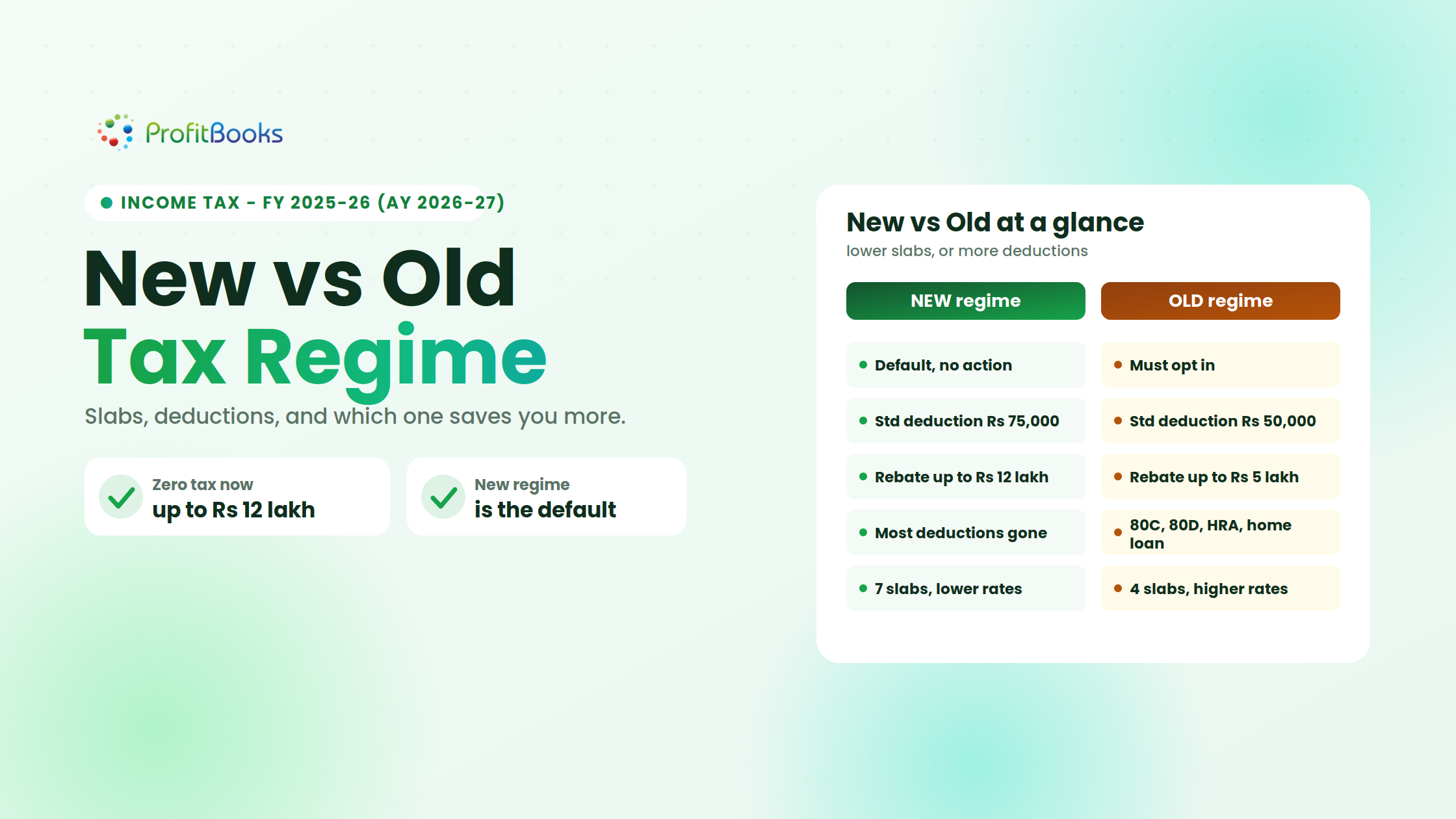
What are the key income tax changes from April 1, 2026? From April 1, 2026, the new tax regime under Section 115BAC becomes the default. A unified “Tax Year” replaces the old FY/AY system, the standard deduction is ₹75,000 under the new regime, and new labour codes mandate that basic pay must be at least…

Details
Financial Year-End Checklist for Businesses in India

Financial Year-End Checklist for Businesses in India (2026 Guide)

What are the essential compliance tasks before the financial year-end in India? Before FY 2025-26 ends on March 31, 2026, Indian businesses must reconcile all GST returns (GSTR-1, 3B, 2B), verify and claim eligible Input Tax Credit (ITC), clear final advance tax instalments, reconcile bank statements, and ensure all MSME vendors are paid within 45…

Details
GSTR-2A Explained

GSTR-2A Explained: Meaning, ITC Tracking and How It Works (2026 Guide)

What is GSTR-2A? GSTR-2A is a dynamic, auto-generated read-only statement on the GST portal that displays all purchase invoices uploaded by your suppliers in real-time. While it helps businesses track and verify Input Tax Credit (ITC) eligibility throughout the month, it is not used for final ITC claims in 2026—that formal role belongs to the…

Details
Client Not Paying in India? What to Do Before Sending a Legal Notice

Client Not Paying in India? What to Do Before Sending a Legal Notice (2026 Guide)

Quick Answer: If a client is not paying in India, do not immediately send a legal notice. Instead, follow these steps: 1. Stop all further work immediately. 2. Send documented follow-ups via email and WhatsApp. 3. Use the GST portal (“Communication Between Tax Payers”) to officially log the non-payment. 4. Email your MSME certificate, citing…

Details
GSTR-1 vs GSTR-3B

GSTR-1 vs GSTR-3B: Key Differences, Filing Process and Due Dates (2026 Guide)

Quick Answer: The primary difference between GSTR-1 and GSTR-3B is their purpose and sequence. GSTR-1 is a detailed, invoice-level report of your sales (outward supplies) that must be filed first so your buyers can claim Input Tax Credit. GSTR-3B is a consolidated summary return filed afterward, used to declare your final tax liability, claim your…

Details