Payroll Tax, Regulations And Process In Australia
On this page 9 sections
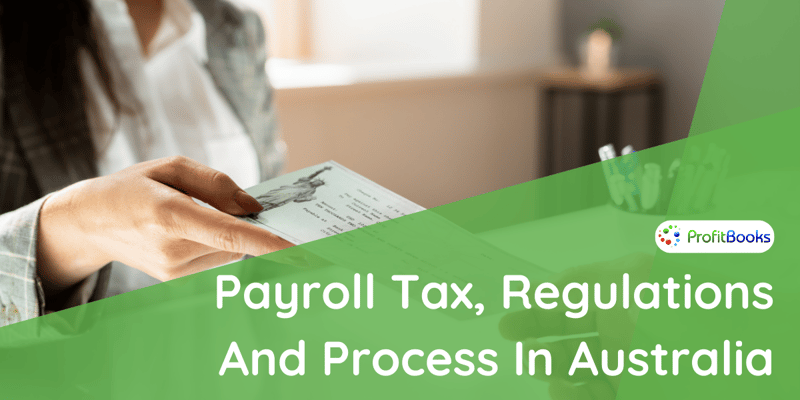
Payroll in general refers to the process of managing employee compensation, including calculating wages, deducting taxes, and distributing payments, usually on a regular schedule, like biweekly or monthly.
In Australia, there are certain payroll rules and regulations and a special tax asserted by the Australian Taxation Office (ATO).
Australia’s thriving economy and welcoming business atmosphere are drawing folks from all over. Yet, getting started with pay wages and onboarding can be quite a hassle. Like elsewhere, employers in Australia must stick to wages rules to dodge hefty fines.
In this article, we’ll break down the Aussie payroll system for you.
Australia & New Zealand Payroll Process Brief
Note that all regulations of payroll tax-related stuff are managed by ATO, and it’s best to run through ATO’s guide on ‘single-touch payroll’. The way we handle wages is the same for all countries we support, including:
- Getting things ready before payday.
- Printing paychecks.
- Making financial records.
- Checking payroll details.
- Finalizing everything.
For employees in Australia and New Zealand, you need to do all these steps. But make sure you know how our basic JD Edwards EnterpriseOne Payroll system works before you deal with payments for Australian and New Zealand employees.
This guide only talks about the steps and things unique to handling payments for them.
Plenty of companies worldwide use payroll software to pay their staff, and Australia is no exception. The Aussie payroll system can get tricky, especially depending on your job field.
To know how ProfitBooks can manage your payroll efficiently, go through our payroll guide and get started with us!
What Are The Payment Periods For Wages?
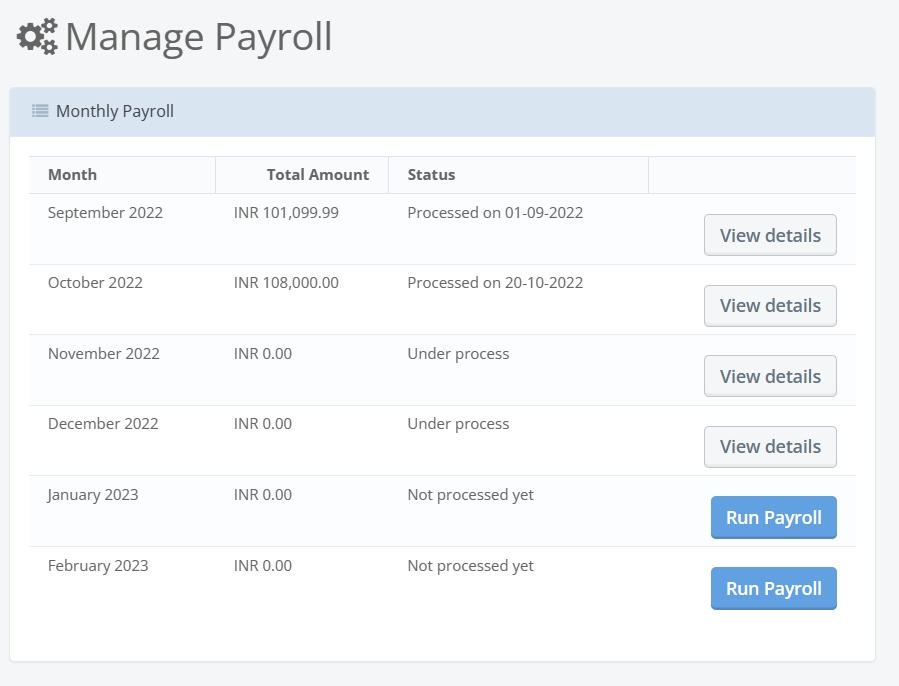
A pay period is simply the schedule for paying employees while they work at a company. This can be every week, every two weeks (fortnightly), or once a month, with the money usually sent straight to their bank accounts.
Companies get to choose which pay period suits each job. The type of job can also decide how often someone gets paid.
For instance, casual workers might get paid every week based on their hours. Meanwhile, full-time employees often receive a monthly salary. Australian payroll software has to be able to handle all these differences.
Payroll Taxes: How Do They Work In Australia?
We’ve discussed payroll taxes briefly in our Australian Business Taxes Guide, so you can refer to that if you’d like to know in-depth about all business taxes in Australia.
If your business is paying salaries, benefits, and superannuation contributions that go beyond the tax-free threshold set by your state or territory, you’ll need to factor in payroll tax as one of your financial responsibilities.
Now, since payroll tax is specific to each state, you’ll need to visit your local government’s official websites to find out what those specific thresholds and tax rates are.
Making it clearer with examples
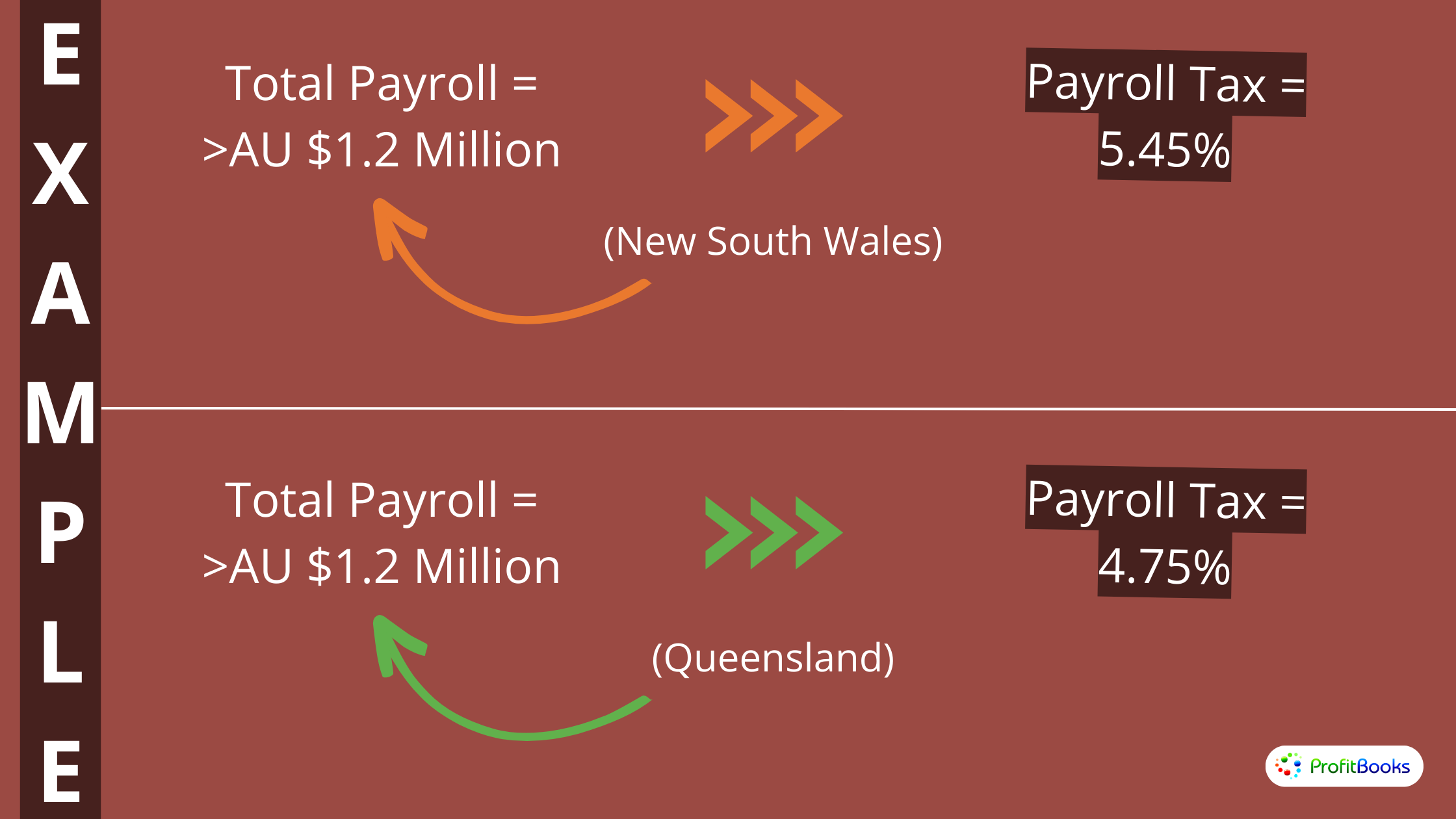
To give you an idea, let’s say you have employees in New South Wales. If your total wage payments for them exceed $1.2 million, you’ll be required to pay a payroll tax rate of 5.45% to your local government. On the other hand, if you employ people in Queensland and your wage payments surpass $1.2 million, you’ll be subject to a payroll tax rate of 4.75%.
The difference between these tax rates based on region is shown in the graphic below.
So this is how the taxation system for paying wages works.
In the 2018-2019 financial year, Queensland (QLD) and New South Wales (NSW) had specific money limits for payroll tax: $91,666 for QLD and $72,192 for NSW.
If you have employees in both QLD and NSW and your total employee wages for those 31 days are:
- $95,000 – you have to sign up for payroll tax in both states.
- $75,000 – you only need to register in NSW.
If your total Australian wage bill is below the maximum limit set by your state or territory, you don’t have to pay payroll tax.
Single Touch Payroll (STP): What It Is & How It Works
Single Touch Payroll (STP) is a government effort in Australia to make life easier for employers when they report to government agencies.
Here’s the deal with STP: Whenever you pay your employees using STP-ready software, you share their payment details with the government. This info covers things like salaries, taxes, and superannuation.
STP rolled out on July 1, 2018, for big employers (20 or more employees) and on July 1, 2019, for smaller ones (19 or fewer employees). And guess what? It’s not optional—it’s a must-do.
Starting from January 1, 2022, they made STP even more detailed, collecting extra payroll data (they call it STP Phase 2).
How does STP work?
STP, or Single Touch Payroll, is a nifty system. It takes info about taxes and super from your payroll software and sends it straight to the tax folks at the ATO when you do employee payments.
Here’s how it works:
- Run your payroll.
- Pay your crew just like you always do.
- Hand out payslips like usual.
No need to mess with your pay schedule. Keep paying your team weekly, every two weeks, or once a month – your call!
Are there any penalties?
The ATO has been talking to employers and tax experts a lot ever since STP reporting became something everyone has to do. If you still haven’t started or moved to STP Phase 2 reporting, and you don’t have an excuse, you might face penalties for not doing it on time.
If a company doesn’t send the STP payroll report to the ATO by payday, could the ATO impose fines on them?
Yes, they could. Each late filing could cost $210, so if a business files its 52 weekly pays just one day late, it might end up with fines totaling $10,920 for the year.
Fringe Benefits Tax (FBT)
We have talked about Fringe Benefits Tax (FBT), and all other business taxes in Australia, so we’d recommend you check out that post before.
Along with the payroll taxes, there’s also the fringe benefits tax, which applies to all the benefits that corporations provide to their employees, other than the CTC or salary.
A fringe benefit is an extra perk or form of compensation given to an employee on top of their regular salary or wages.
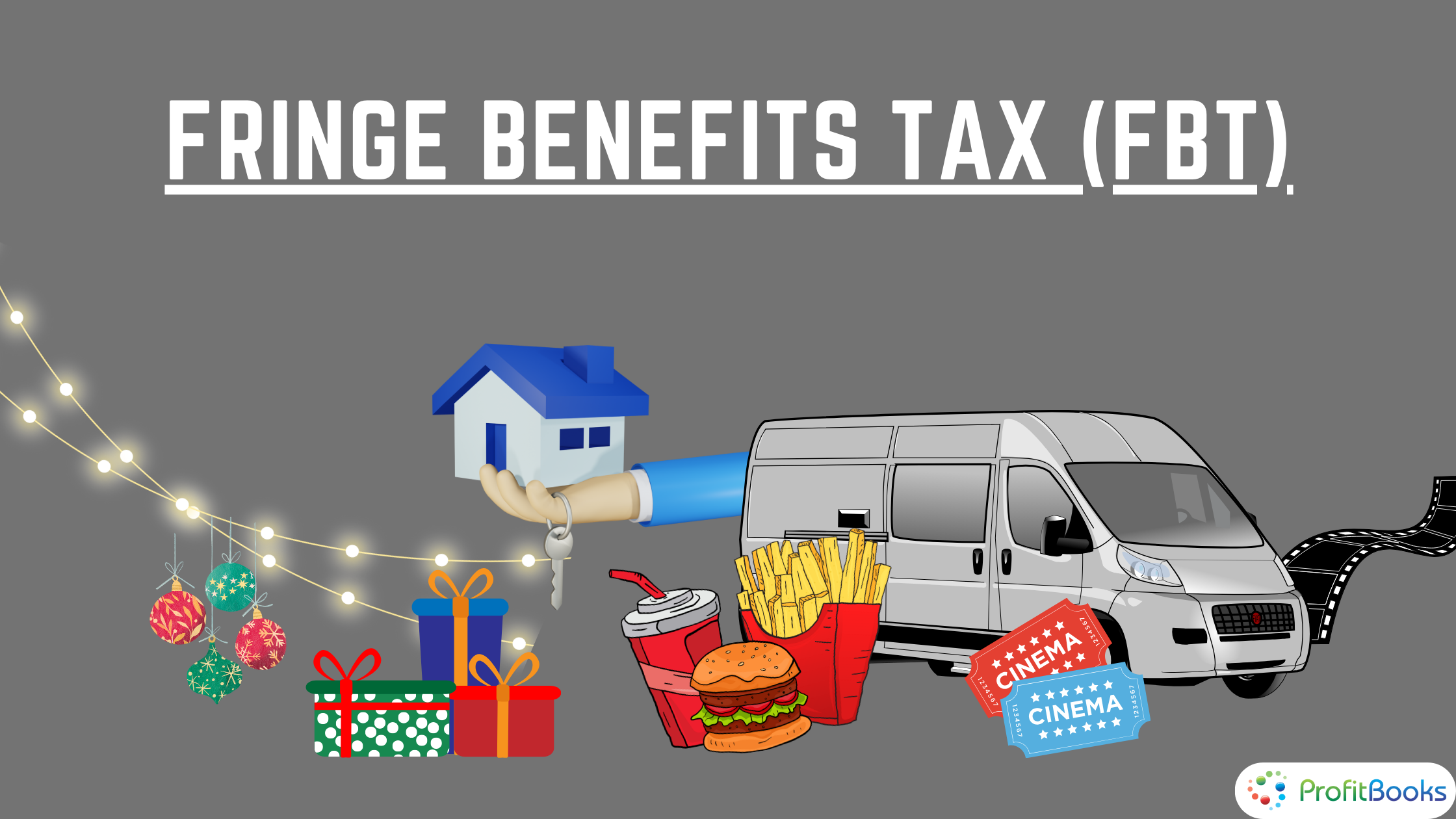
Let’s say you’re running a company and you’re also an employee of that company. In this case, any additional benefits you receive, apart from your salary, are considered fringe benefits.
These fringe benefits can take various forms, including:
- Providing an employee with a loan that doesn’t accrue interest.
- Allowing an employee to use a company vehicle for their personal use.
- Reimbursing an employee for their children’s school fees.
- Covering an employee’s health insurance costs.
- Covering expenses related to entertainment, like hosting a Christmas party for employees and their partners.
These are just a few examples of fringe benefits, and there can be more. It’s important to understand that these benefits come with specific tax implications and regulations, so it’s wise to consult a professional for guidance on how to handle them correctly.
Conclusion
In conclusion, understanding the taxation landscape for small businesses in Australia is crucial for financial planning and compliance.
In this dynamic tax landscape, proactive tax planning and compliance will continue to be essential for the success and sustainability of small businesses in Australia.
If you’re an Australian business and are looking to manage your payroll efficiently, ProfitBooks can be a viable option for you. Our robust accounting software and powerful bookkeeping offer impeccable features without burning a hole in your pocket.
Sign up for a 100% FREE account now!
Also Read:
What Taxes Do Small Businesses Pay In Australia?
CGT vs GST: How Do They Differ In Australia?
4 Perfect Quickbooks Alternatives In Australia