How To Calculate VAT in South Africa?
On this page 17 sections
South Africa has a Value-Added Tax (VAT) regime, which is set at a fixed rate of 15%. VAT can be added and subtracted from any bill, invoice, PO, etc., while a taxable transaction takes place. In this article, we will cover what South African VAT is and how you can calculate VAT in South Africa.
Whether you’re issuing invoices, making purchases, or filing VAT returns, knowing how to calculate VAT correctly is essential for your business operations.
In this comprehensive guide, I’ll walk you through everything you need to know about calculating VAT in South Africa, including the current rates, calculation methods, special cases, and compliance requirements.
What Is South Africa VAT?
South Africa’s Value Added Tax (VAT) is a consumption tax applied to goods and services.
Simply put, it’s like a little extra cost you pay when you buy things.
Imagine you’re getting a pair of shoes: the marked price includes VAT. So, if the shoes cost 100 rand and the VAT rate is 15%, you’re paying 15 rand in VAT.
After a brief period of uncertainty in early 2025 when an increase to 15.5% was proposed, the government reversed this decision on April 24, 2025, keeping the rate at 15% to prioritize fiscal sustainability and shield low-income households from inflationary pressures.
Some items are zero-rated (0%) or exempt, such as basic foodstuffs, educational services, and certain financial services.
The government collects this tax at each stage of production and distribution, but it’s the end consumer, like you buying those shoes, who ultimately shoulders the VAT burden. It’s a way for the government to get a slice of the economic pie every time you make a purchase.
South Africa VAT Calculation Methods
Calculating VAT might seem complicated at first, but it’s quite straightforward once you understand the basic principles. There are two main scenarios you’ll encounter:
1. Adding VAT (VAT Exclusive to Inclusive)
When you need to add VAT to a price that doesn’t include it yet:
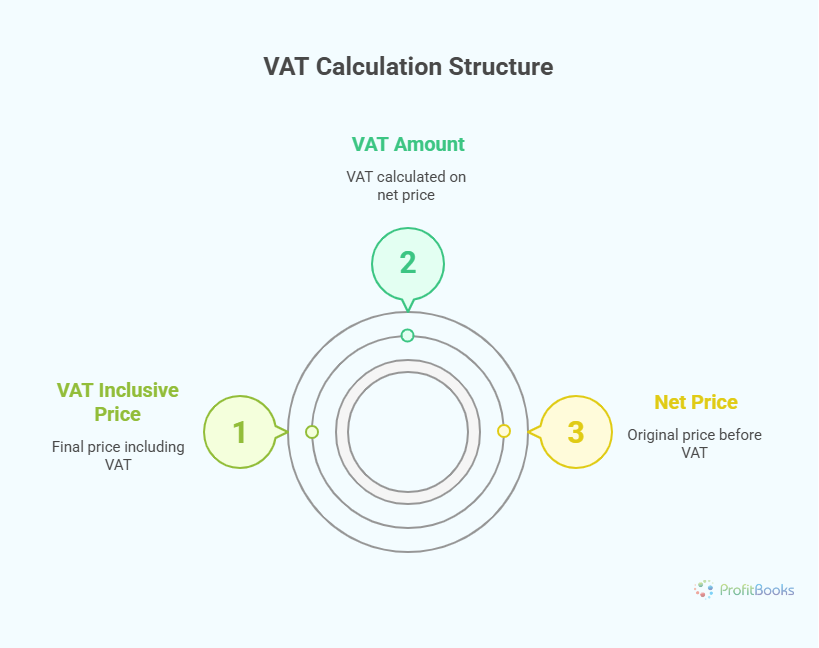
- Multiply the net price (price before VAT) by the VAT rate (0.15 for 15%)
- Add the VAT amount to the net price to get the total (VAT-inclusive) price
Formula:
- VAT Amount = Net Price × VAT Rate
- VAT Inclusive Price = Net Price + VAT Amount
Example: If an item costs R100 (excluding VAT):
- VAT amount = R100 × 0.15 = R15
- VAT-inclusive price = R100 + R15 = R115
2. Removing VAT (VAT Inclusive to Exclusive)
When you need to determine the VAT-exclusive price from a VAT-inclusive amount:
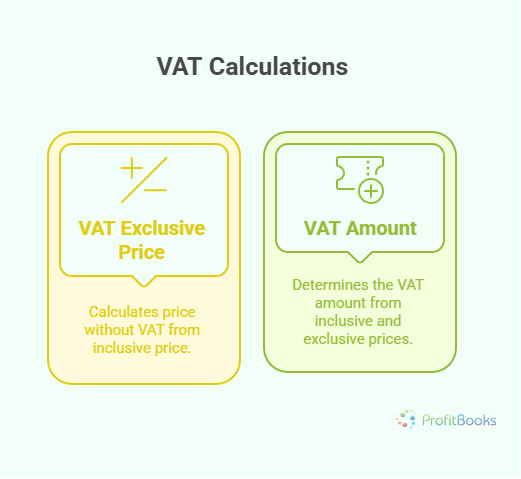
- Divide the VAT-inclusive price by 1 plus the VAT rate (1.15 for 15%)
- The VAT amount is the difference between the VAT-inclusive and VAT-exclusive prices
Formula:
- VAT Exclusive Price = VAT Inclusive Price ÷ (1 + VAT Rate)
- VAT Amount = VAT Inclusive Price - VAT Exclusive Price
Example: If an item costs R115 (including VAT):
- VAT-exclusive price = R115 ÷ 1.15 = R100
- VAT amount = R115 - R100 = R15
South African VAT Calculation in Excel
Using Excel for VAT calculations can save time and reduce errors for businesses that process multiple transactions.
Here are the formulas you can use:
- VAT Amount = Price * VAT Rate
- VAT Inclusive Price = Price * (1 + VAT Rate)
- VAT Exclusive Price = VAT Inclusive Price / (1 + VAT Rate)
For example, if you have a price in cell A1, you can calculate:
- VAT amount (15%): =A1*0.15
- VAT-inclusive price: =A1*1.15
- VAT-exclusive price (from inclusive): =A1/1.15
Special VAT Calculations
VAT on Imports
Calculating VAT on imported goods is more complex as it considers additional factors:
- First, calculate the Added Tax Value (ATV): ATV = Customs Value + 10% of Customs Value + Duties
- Then calculate the VAT payable: VAT Payable = ATV × VAT Rate
Example: If you import goods with a customs value of R10,000 and a duty of R2,000 (20%):
- ATV = R10,000 + R1,000 + R2,000 = R13,000
- VAT payable = R13,000 × 0.15 = R1,950
VAT on Digital Services
The rules for digital services provided by foreign suppliers have been updated as of April 2025:
- B2B Exemption: Foreign suppliers providing digital services exclusively to VAT-registered South African businesses are now exempt from VAT registration. However, this only applies if 100% of their clients are VAT-registered, with strict proof-of-registration requirements.
- B2C Obligations: Non-residents supplying digital services to consumers must still register for VAT if annual turnover exceeds R1 million. Invoicing rules now require detailed service descriptions and customer VAT numbers for B2B transactions.
VAT on Imported Services
For imported services (e.g., consulting or software licenses) supplied by non-residents:
- South African businesses must self-assess and pay 15% VAT via SARS eFiling if the services are for non-taxable use.
- Exemptions apply if the service would be zero-rated or exempt domestically (e.g., educational services).
- Unlike regular input VAT, this VAT cannot be claimed as an input tax credit.
Common VAT Calculation Mistakes
Based on my experience working with small businesses, here are some common mistakes to avoid:
- Using the wrong VAT rate: Always verify you’re using the current rate (15%)
- Not distinguishing between inclusive and exclusive prices: Be clear whether prices include VAT
- Forgetting to update systems: When rates change, ensure your accounting software is updated
- Incorrectly claiming input VAT: You cannot claim VAT on exempt items or for non-business use
- Poor record-keeping: Keep all tax invoices and documentation organized
- Miscalculating imported services VAT: Remember self-assessment requirements
Step-by-Step Procedure to Calculate VAT in South Africa
Disclaimer: We’ve taken VAT rates at 15% for realistic examples from a South African VAT perspective.
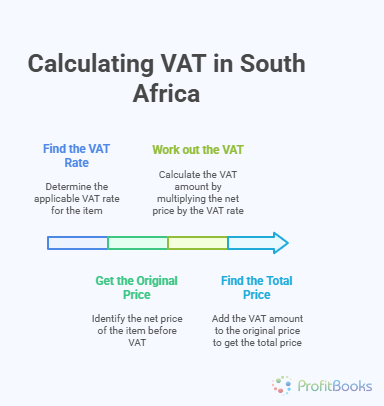
Step 1: Find the VAT Rate. Figure out the VAT rate for your stuff. Let’s say it’s 15%.
Step 2: Get the Original Price. The original price of your item before adding VAT is the net price. If it’s R100, move on.
Step 3: Work out the VAT. Multiply the net price by the VAT rate. So, R100 times 15% (0.15) is R15. This R15 is your VAT amount.
Step 4: Find the Total Price. Add the VAT amount to the original price. In our case, R100 + R15 gives you R115. That’s your total, including VAT.
By following these steps, you should be able to calculate VAT in South Africa for your business in no time. Stay tax-compliant!
Transitional Challenges and System Updates
Following the government’s reversal of the planned VAT increase (from 15% to 15.5%), businesses that had already updated their systems faced transitional challenges.
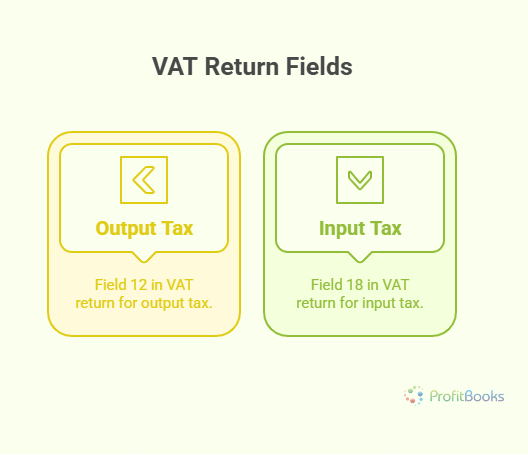
SARS permits the temporary use of 15.5% until May 15, 2025, with adjustments to be reported in VAT return fields 12 (output tax) and 18 (input tax).
If your business has already prepared for the increase, ensure your systems are reverted to 15% promptly. SARS will automatically calculate VAT at 15% for all filings post-May 1, 2025.
Practical Online Tools for VAT Calculation
Several free online tools can help you calculate VAT quickly:
Accounting Software Solutions: Simplifying VAT Management
Managing VAT manually can be time-consuming and prone to errors, especially as your business grows. This is where specialized accounting software becomes invaluable.
Let me expand on how the right software solution can transform your VAT management process.
How ProfitBooks Simplifies VAT Calculations
As someone who has worked with hundreds of businesses across Africa, I’ve seen firsthand how proper software can eliminate VAT headaches. ProfitBooks was designed specifically with this challenge in mind, offering several features that make VAT management nearly effortless:
1. Automated VAT Calculations
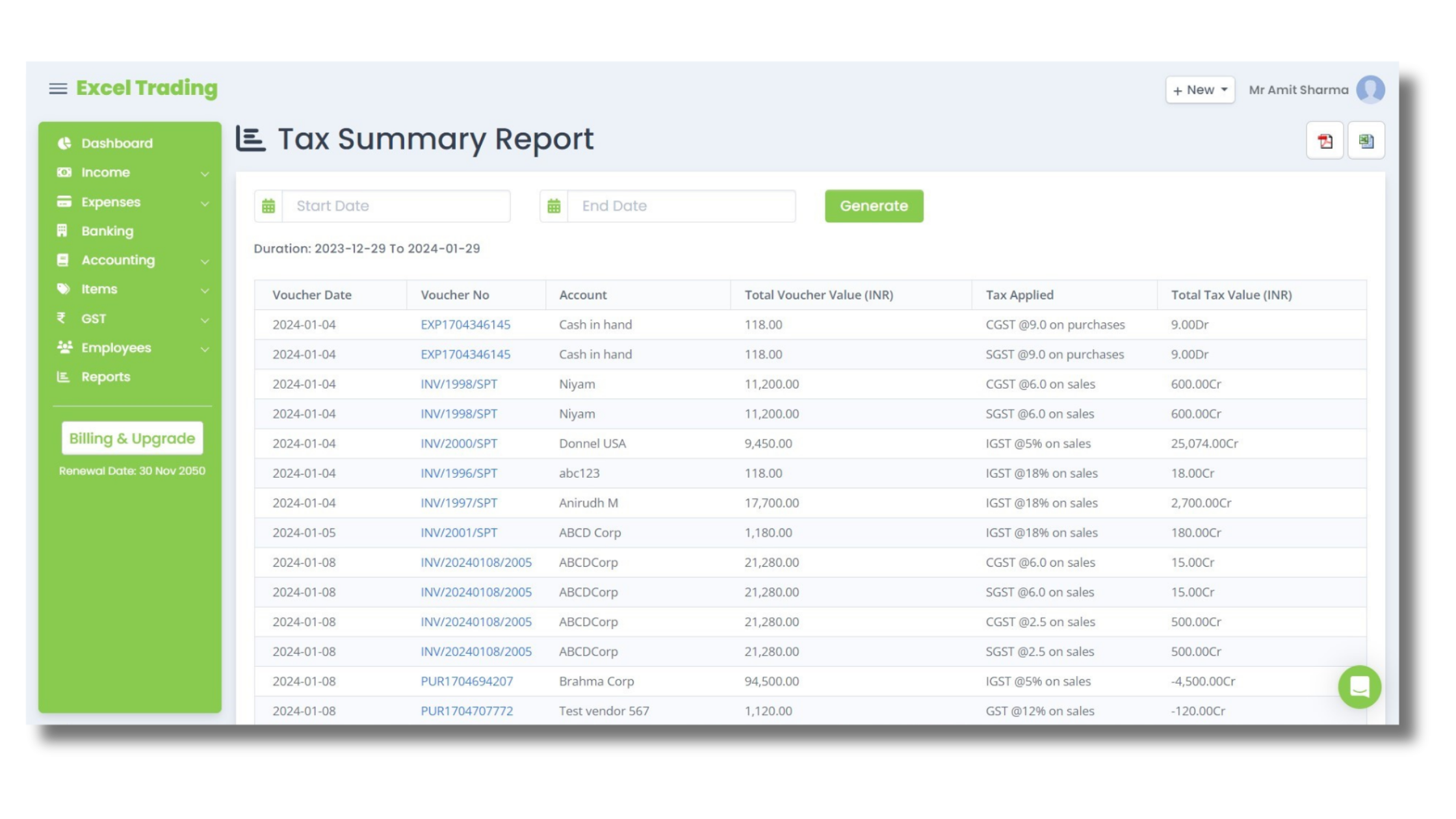
ProfitBooks automatically applies the correct VAT rate (15%) to your transactions.
When you create an invoice or record an expense, the system calculates the VAT component instantly. This eliminates manual calculations and the potential for mathematical errors that often occur when calculating VAT on multiple items with different rates.
For example, if you’re creating an invoice with multiple products, some zero-rated and others standard-rated, ProfitBooks will automatically apply the correct VAT treatment to each line item. No more wondering “Did I calculate that correctly?” or “Is this item zero-rated?”
2. VAT-Compliant Invoice Generation
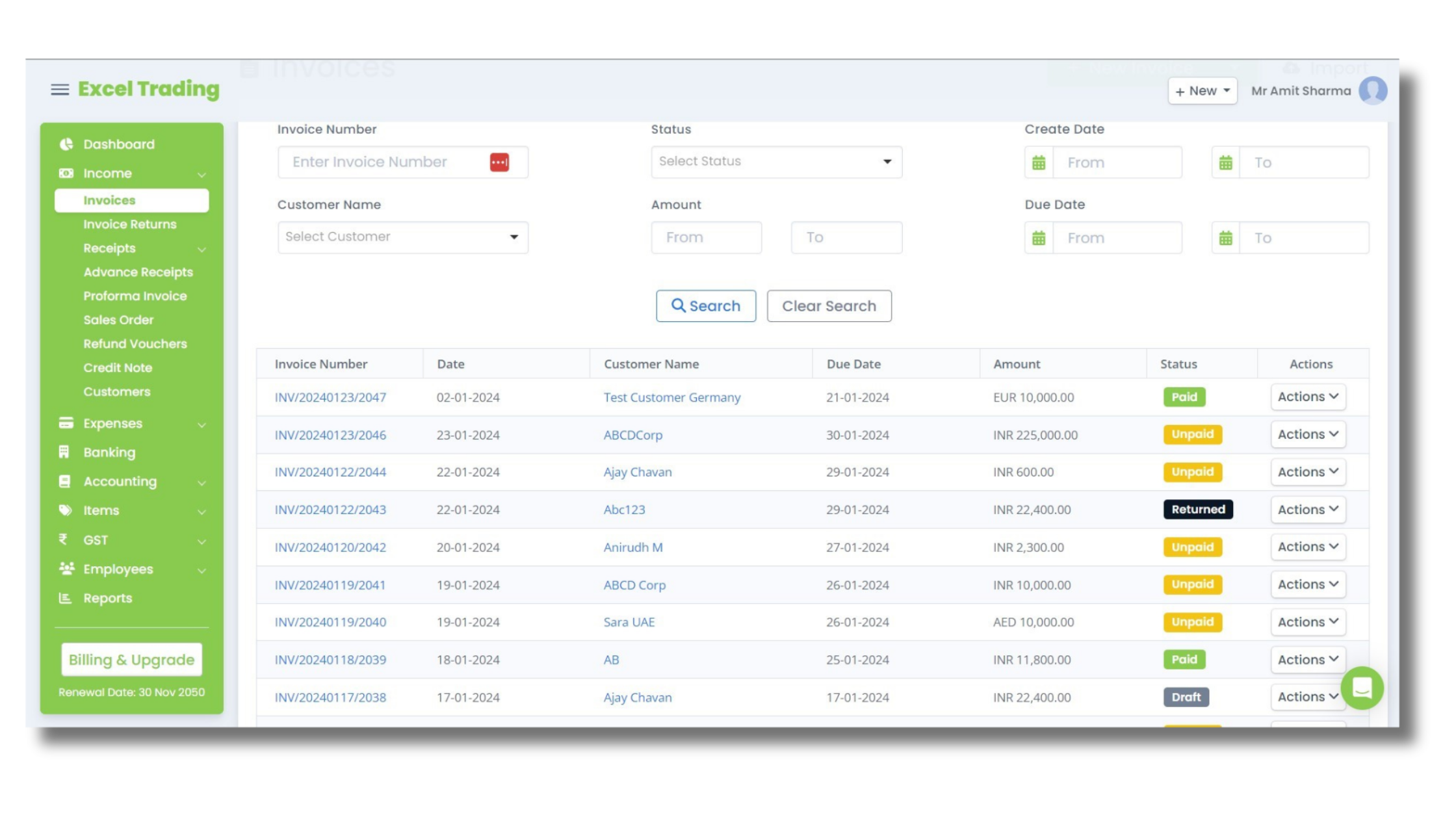
The system generates SARS-compliant tax invoices that include all required elements:
- Your VAT registration number
- The words “Tax Invoice” are displayed
- Sequential invoice numbering
- Proper itemization with VAT amounts clearly shown
- Correct treatment of zero-rated or exempt items
This compliance is crucial because incorrect invoices can lead to rejected input VAT claims or penalties during audits.
3***. VAT Return Preparation***
When it’s time to file your VAT return, ProfitBooks generates a comprehensive VAT report that aligns with the SARS VAT201 form. The report shows:
- Total output VAT collected (VAT on sales)
- Total input VAT paid (VAT on purchases)
- Net VAT payable or refundable
- Breakdown by VAT categories (standard-rated, zero-rated, exempt)
I’ve spoken with customers who used to spend 2-3 days preparing VAT returns manually. With ProfitBooks, the same process takes about 30 minutes, mostly just reviewing the automatically generated figures.
4. Digital Record-Keeping
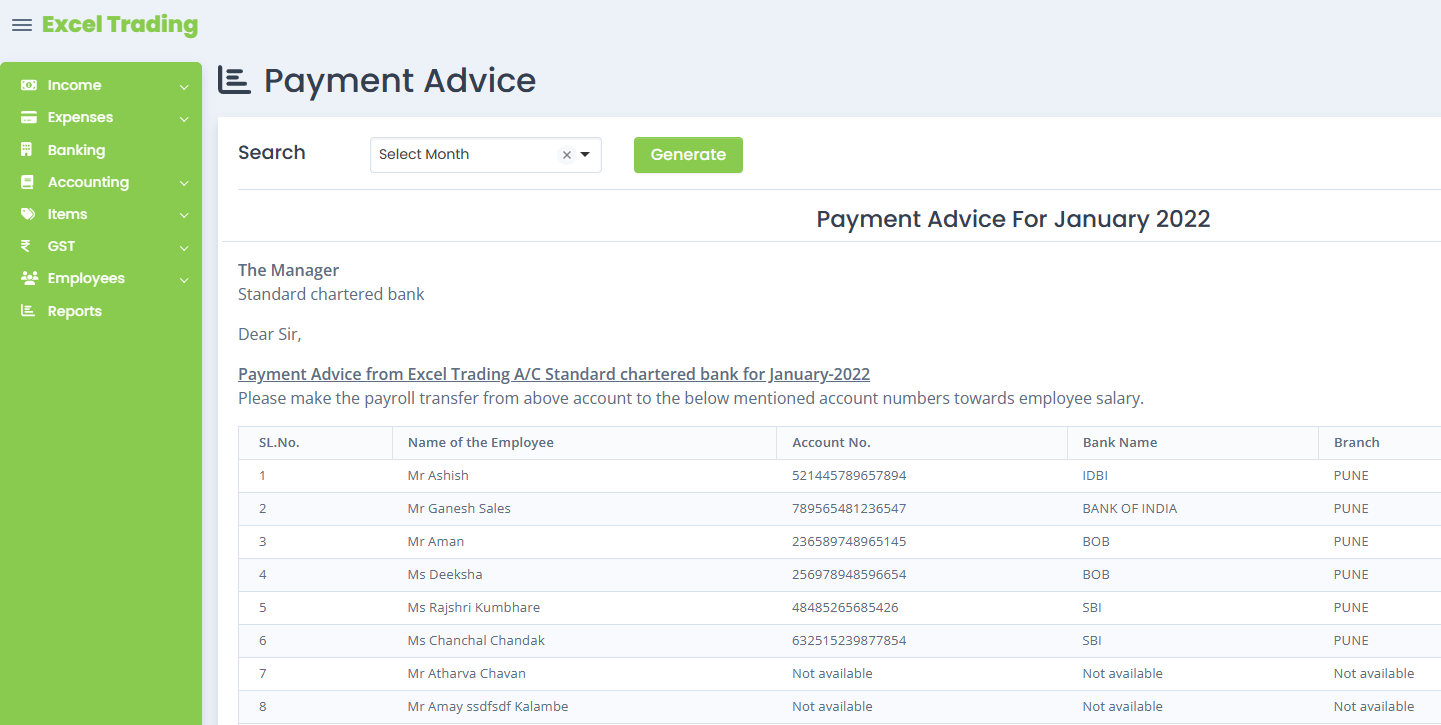
The software maintains digital records of all VAT-related transactions and documents. This is invaluable during SARS audits or verification processes:
- All tax invoices are stored electronically and linked to transactions
- A complete audit trail shows any changes or adjustments to VAT amounts
- Supporting documents can be attached to transactions
One of our customers, a retail business in Cape Town, was selected for a VAT audit last year. Because all their records were organized in ProfitBooks, they completed the audit in two days with no adjustments – a process that typically takes weeks.
5. VAT Expense Tracking
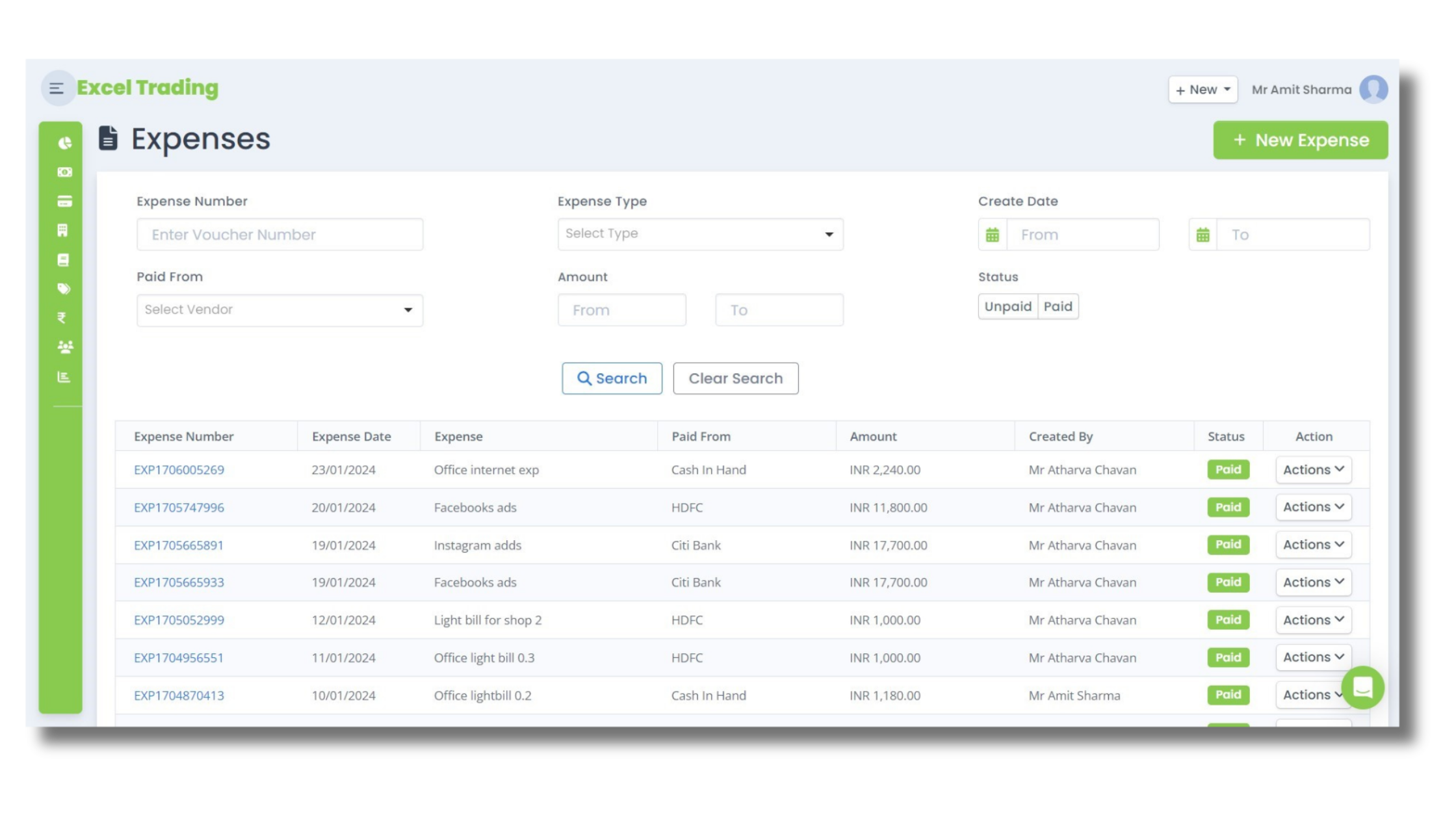
For input VAT management, ProfitBooks allows you to:
- Scan and store receipts for VAT expenses
- Categorize expenses correctly for VAT purposes
- Flag non-deductible VAT items
- Track VAT paid to suppliers but not yet claimed
This visibility helps prevent common mistakes like claiming input VAT on exempt expenses or missing legitimate deductions.
6. Multi-Rate Support for Complex Businesses
If your business deals with exports (zero-rated) or has operations in multiple countries with different VAT requirements, ProfitBooks handles these complexities with ease:
- Supports multiple VAT rates within a single transaction
- Handles zero-rated exports correctly
- Manages VAT-exempt transactions appropriately
7. VAT Cash Flow Management
One often-overlooked aspect of VAT management is the impact on cash flow. ProfitBooks provides:
- Forecasts of upcoming VAT payments
- Alerts for large expected VAT payments
- Reports showing historical VAT payment patterns
This helps you plan for large VAT payments and avoid cash flow surprises.
Frequently Asked Questions
- What is the current VAT rate in South Africa?
The standard rate is 15% after the government reversed the planned increase to 15.5%.
- How do I calculate VAT on a price in South Africa?
Multiply the price by 0.15 (for 15%) to get the VAT amount. Add this to the original price for the VAT-inclusive total.
- How do I remove VAT from a price?
Divide the VAT-inclusive price by 1.15 (for 15%). The result is the VAT-exclusive price. The VAT amount is the difference between the inclusive and exclusive prices.
- Who must register for VAT in South Africa?
Businesses with taxable turnover exceeding R1 million in any 12 months must register. Voluntary registration is allowed for turnover above R50,000.
- What is the difference between zero-rated and exempt items?
Zero-rated items are taxed at 0% (e.g., basic foods, exports), allowing input VAT claims. Exempt items (e.g., educational services, residential rentals) are not taxed, and input VAT cannot be claimed.
- How is VAT calculated on imported goods?
VAT is calculated on the Added Tax Value (ATV): Customs Value + 10% of Customs Value + Duties. Then multiply by the VAT rate (15%).
- How often must VAT returns be filed?
Filing frequency depends on turnover: monthly (above R30 million), bi-monthly (R1.5–30 million), or quarterly/bi-annually for smaller businesses.
- What happens if I pay VAT late?
A penalty of 10% is charged on the outstanding VAT amount, plus interest at the official rate.
- Can tourists or foreigners claim VAT refunds?
Yes, if the purchase exceeds R250 and goods are exported within 90 days. Refunds are processed at designated airports and border posts.
- Are foreign digital service providers exempt from VAT?
Only if ALL South African clients are VAT-registered. Mixed B2B/B2C suppliers must still register and charge VAT.
Conclusion
In brief, the South African VAT calculator is a must-have tool for both businesses and individuals looking to calculate VAT in South Africa. It makes figuring out VAT amounts and prices at different stages of buying and selling much easier.
To calculate VAT in South Africa, consider things like the VAT rate, sales, imports, and purchases, simplifying the whole process to calculate VAT in South Africa.
Whether you’re running a business, buying stuff, or involved in importing/exporting, this guide is your go-to for figuring out and calculating South African VAT, taking it off amounts, and working out prices before VAT.
Most importantly, it keeps you in line with the VAT Act, saving you from penalties and financial headaches.
*Want to simplify your VAT management?
[
Try ProfitBooks free for 14 days
](https://www.profitbookshq.com/users/sign_up?plan=Startup)
with no credit card required.*
Also Read:
Small Business Taxes In South Africa
South Africa VAT Rates & Registration
Black Tax in South Africa: What It Is & How It Works
The 5 Business Structures In South Africa Explained