

We have covered the best Ecommerce platforms to sell your products online earlier. In that blog, we mentioned that building your own website, using robust ecommerce website builders, is the best, when it comes to maximizing profitability and having complete control of your inventory and operations.
Yes, managing an ecommerce inventory may become a tedious task, taking into consideration due payments, excess and scarce stock, restocking inventory, and more! This is why having an easy-to-use ecommerce accounting and inventory software like ProfitBooks is a must, as it automates all these menial and tedious tasks for your ecommerce business.
You can use ProfitBooks, completely FREE, without spending a single buck! Yes, it’s 100% FREE software, so why not sign up and try it now?
Anyway, I digress. Just as important as cloud inventory software is having ecommerce website builders to develop your own ecommerce platform. At the end of the day, the better you build your website, the higher the chances of getting quality website visitors you have.
In this article, we’ll discuss what Ecommerce website builders are, how they work, and the five best and free ecommerce website builders we’ve found online!
What Are Ecommerce Website Builders?
Imagine you have a brilliant idea for a product and want to sell it online. But the thought of building a whole website from scratch sounds daunting. This is where an ecommerce website development company comes in! Think of them as user-friendly platforms designed specifically to create online stores, even if you have zero coding experience.
These platforms offer a complete toolkit, eliminating the need to hire a web developer or programmer. Instead, they provide pre-built components, like product pages and shopping carts, that you can easily assemble to create your dream store.
While big-scale projects might need the assistance of in-house or offshore E-commerce development experts, these website builders are great for E-commerce beginners and small business owners.
Many builders even have drag-and-drop interfaces, allowing you to visually arrange your store’s layout just by clicking and dragging elements around. It’s like building a virtual storefront with Legos – simple, intuitive, and perfect for beginners.
But what exactly makes eCommerce website builders so powerful? Let’s dive deeper into the key features they provide:
The Ecommerce Platform Builders Toolbox
-
- Stunning Storefronts: Gone are the days of plain, text-heavy websites. Ecommerce builders offer a library of beautiful themes that act as the design foundation for your store. These themes are fully customizable, allowing you to incorporate your brand colors, logos, and images to create a unique shopping experience.
-
- Product Powerhouse: Adding your products is a breeze! Simply upload clear pictures, write compelling descriptions, and set prices – all within the builder’s user-friendly interface. Advanced builders now feature AI-powered tools that help optimize product descriptions and manage stock levels in real-time, ensuring you never run out of inventory and disappoint your customers.
-
- Seamless Payment Processing: This is the cash register of your online store! Ecommerce builders integrate with popular payment processors like PayPal or Stripe, allowing customers to securely pay using credit cards, debit cards, or digital wallets at checkout.
-
- Effortless Shipping: No need to become a shipping expert! Builders often connect with major shipping carriers like UPS, FedEx, Blue Dart, and Delhivery, enabling you to offer different shipping options and calculate costs automatically for your customers. This saves you time and ensures a smooth shopping experience for your buyers.
- AI-Powered Features: In 2026, leading ecommerce builders now incorporate artificial intelligence to help with everything from product recommendations and chatbots to automated inventory management and predictive analytics, making it easier than ever to run a successful online store.
12 Best FREE Ecommerce Website Builders To Build Your Online Store
Developing an ecommerce website is now essential to the expansion of your company. Consequently, it’s critical to choose the best eCommerce website builder platform.
This section will help you explore the wide world of ecommerce website builders and highlight the most creative and user-friendly solutions out there. Additionally, we’ll offer some advice in the next section on selecting the best website-building tool.
1. Woocommerce

Woocommerce Home Page
With the help of the free, open-source plugin Woocommerce, WordPress websites may now provide eCommerce features. WooCommerce is among the greatest options for creating an online store because of its smooth integration.
WooCommerce also has the benefit of not charging extra for transactions, which makes it very affordable for WordPress websites. WooCommerce also has the benefit of not charging extra for transactions, which makes it very affordable for WordPress websites. Again, you can use product feeds to promote your products on different marketing channels such as Google Shopping, Instagram Shop, etc in order to increase WooCommerce sales.
However, the way you configure it will determine how well your WooCommerce website performs. The customer experience of your online business will be influenced by the hosting provider you select as well as the quantity of plugins and extensions you utilize.
Key Features:
- WooCommerce on mobile: Manage your store & process orders anywhere (mobile app).
- Sell globally: Reach wider audiences with multilingual stores & multiple currencies.
- Showcase products: Easily display products with product blocks & filter by category.
- Accept payments: Offer a variety of payment options (credit cards, cash on delivery, etc.) through 100+ gateways.
Pricing:
The WooCommerce ecommerce website builders software is included with WordPress.com and is free.
But in order to utilize it, you first need to get a domain name and hosting. You also need to budget for any possible expenses, such as additional fees.
WooCommerce hosting services are available at Hostinger for as little as $3.99 per month. This comes with an SSL certificate and a free domain name for the first year.
2. Square Online

Square Online User Interface
Square Online is an entirely free plan that includes an infinite number of goods, SEO tools, omnichannel selling, QR code ordering, different shipping and delivery choices, and Square POS syncing.
What are the pros and cons of using Square Online?
Pros:
- Sell unlimited products, even on the free plan.
- Leverage social selling features.
- Built-in SEO tools to improve search ranking.
- Accept a variety of payment methods (Afterpay, Google Pay, Square Pay, Cash App, Apple Pay).
- Integrates with Square POS for in-person sales.
- Offer discounts on shipping rates.
Cons:
- Requires a paid plan to use a custom domain name.
- High processing fees (2.6-2.9% + INR 24 per transaction).
- Displays Square ads unless on a paid plan.
- Can only accept PayPal with the Performance plan or higher.
Pricing & Key Features:
You may test drive a premium plan for free for thirty days.
The monthly cost of these plans starts at around INR 989 and is invoiced yearly. You’ll require a premium plan in order to get a personalized URL.
View Square Online free ecommerce website builders and paid plans here.
What is Square Online’s afterpay feature?
Square Online allows you to offer Afterpay, a pay-in-four option for your consumers, even on its free plan. In addition to the seller receiving immediate access to the cash (less a modest charge), the client also receives their merchandise immediately. Since each client who signs up has a little amount they may borrow at first and their ability to borrow improves with consecutive purchases and timely payments, Afterpay bears the risk.
Since the minimum cart value to use this service is INR 2,886 or more, e-commerce companies with a typical cart total of that much or more would benefit greatly from the pay-in-four option.
You may also take contributions, Google Pay, Square Pay, Cash App, and Apple Pay on any of its plans.
3.Neo Sites

Neo Sites is an AI-powered ecommerce website builder that allows users to create an online store without dealing with technical setup or complex configurations. Instead of installing plugins or managing hosting, users simply describe their business and Neo Site generates a ready-to-use store in minutes. This makes it a convenient option for individuals and small businesses looking for a straightforward way to sell online.
Unlike open-source platforms that require ongoing maintenance, Neo Sites handles hosting, design, and basic setup for you. It also includes business email and a custom domain, helping users establish a professional online presence without relying on multiple tools or services.
While Neo Sites is not designed for highly complex or large-scale ecommerce operations, it works well for simple online stores focused on ease of use and fast setup.
Key Features:
- AI-powered online store creation from a short business description
- Mobile-responsive storefronts optimized for all devices
- Simple product and content management
- Easy customization of text, sections, and layouts
- Built-in contact forms for customer inquiries
- Business email and custom domain included
Pricing:
Neo Sites offers free website creation, allowing users to get started without upfront costs. Paid plans begin at $3.59 per month (billed yearly) and include additional features along with business email and a custom domain. This makes Neo Sites a cost-effective option for users who want a simple ecommerce setup without managing hosting, plugins, or extra integrations.
4. Odoo’s Free Ecommerce Website Builders – With AI

Odoo Ecommerce Website Builders UI
I consider Odoo’s ecommerce website builders module to be a promising platform for online sales. It received praise for having an AI-powered website builder and 3M free stock photos, but it lost points for being limited to using just its Odoo corporate system, which reduced the number of third-party software alternatives available.
Its ecommerce website builders tools are really user-friendly and driven by artificial intelligence. Online companies will find the platform a terrific platform for selling and expanding, but they should be aware of the additional costs that come with selling an unlimited number of items and managing inventories in real-time.
Pricing & Features:
Included in the FREE plan:
- Free domain for a year
- One app only
- The choice of using a WYSIWYG site editor or an AI-based site builder
- UPS and FedEx shipping calculators
- Comprehensive SEO tools
- Embedded live chat
- Automated inventory management
- Product recommendations—upselling and cross-selling features
- Google Analytics integration
Standard Plan: Rs 950/- per user per month
- All apps
- Odoo Online
Custom Plan: Rs 1,420/- user / month
- All apps
- Odoo Online / Odoo.sh** / On-premise
- Odoo Studio
- Multi-Company
- External API
Check the detailed pricing plans of Odoo ecommerce website builders models to better information.
5. Build A Bazaar

BuildABazaar – Ecommerce Website Builders in India- Home Page
BuildaBazaar, an Indian-based platform, empowers businesses to create and manage their online stores. This user-friendly service offers website building tools, product management functionalities, marketing features, and support for various payment gateways. BuildaBazaar caters to businesses of all sizes with a focus on the Indian market.
Here’s what sets BuildaBazaar apart:
- Indian Focus: BuildaBazaar specifically caters to the Indian market. This can be advantageous in terms of understanding local payment preferences, regulations, and potentially even offering features tailored to Indian eCommerce needs.
- Marketing and Payment Integration: BuildaBazaar offers built-in marketing features and integrates with various payment gateways, streamlining the online selling process.
- Focus on Small Businesses: BuildaBazaar emphasizes affordability and ease of use, making it a good option for startups and small businesses entering the ecommerce space.
Pricing & Features:

Build A Bazaar – Pricing Plans
View the detailed pricing plans of BuildABazaar and compare pricing in real-time.
6. Shopify

Shopify – #1 ecommerce platforms in India
Shopify is your one-stop shop for building and managing an online store. Design a user-friendly storefront, manage inventory, and ship products – all from one place. Shopify even integrates with social media and physical stores for a unified sales experience.
Shopify’s popularity stems from its user-friendly approach to e-commerce. A key advantage of Shopify app development is the ultimate flexibility and fast implementation. Entrepreneurs can design stores, manage products, and accept payments – all without coding knowledge. Shopify also scales with your business, offering plans for beginners to high-volume sellers, alongside an app store for adding unique functionalities.
Pricing Plans:
- Shopify Lite (₹20/month, $9/month) lets you add a “Buy” button to your existing website.
- Basic Shopify (₹1,994/month, $29/month) is ideal for launching a new online store with essential features.
- Shopify (₹7,447/month, $79/month) caters to growing businesses with advanced inventory management and reporting.
- Advanced Shopify (₹22,680/month, $299/month) supports high-volume businesses with features for automation and wholesale channels.
Check the live pricing plans for Shopify here.
7. Ecwid
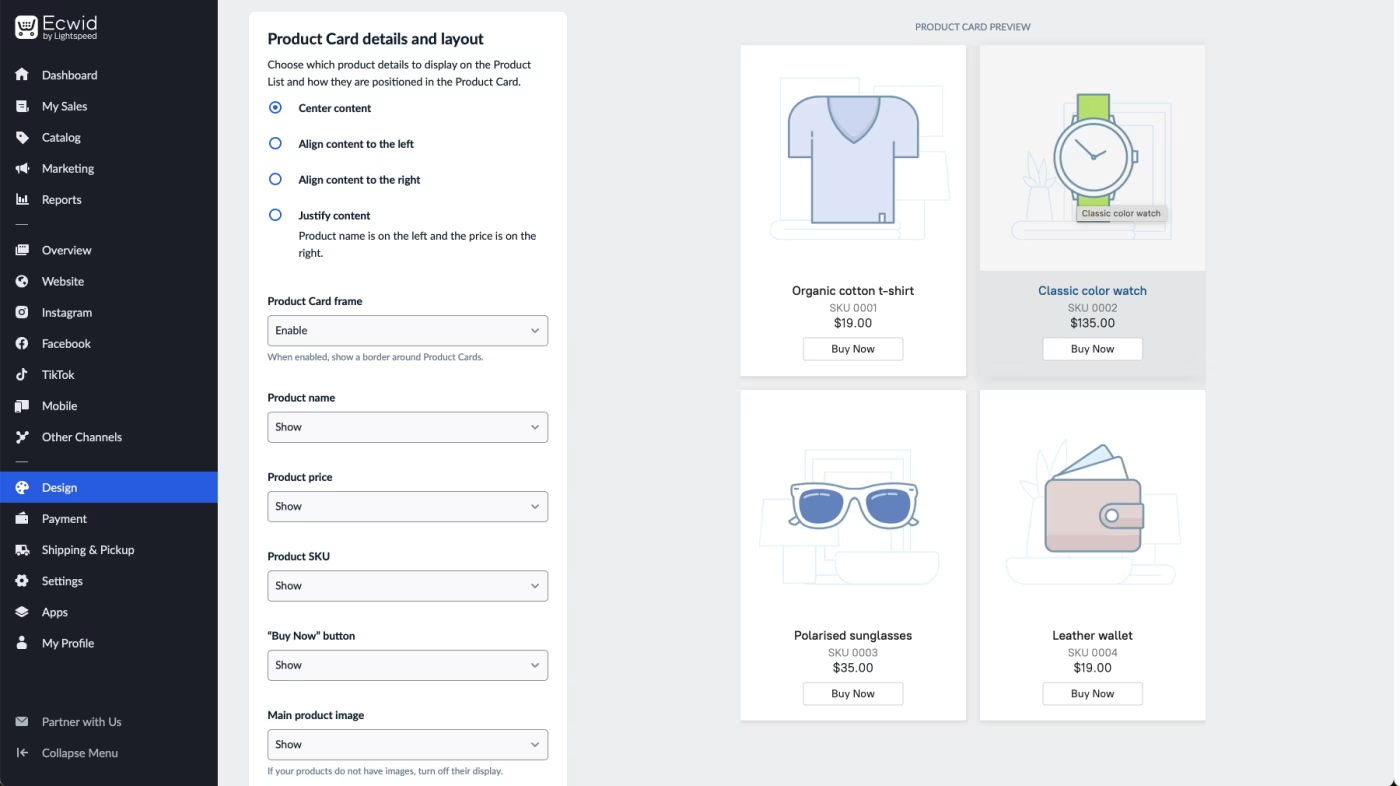
Ecwid by Lightspeed – Ecommerce Website Builders Interface
Ecwid is the ideal option if you want to create an online store with the least amount of money possible. It offers a fantastic free plan that enables you start selling your first five physical items.
Additionally, there are no extra transaction fees beyond what your payment gateway charges, meaning that there is no profit-skimming from unstated costs.
A lengthy, bold to-do list that guides you through establishing your website, uploading your first merchandise, identifying your store, and deciding how you want to distribute goods—and be paid for them—is what you’ll find at the Dashboard. Completing the entire list requires less than fifteen minutes.
Ecwid offers a large feature set in its subscription plans, despite being a fantastic free eCommerce website builders tools.
You may post your things on Amazon or eBay, sell directly to your followers, or accept payments in person thanks to its integration with social media platforms like Facebook and Instagram. It keeps track of your inventory, computes taxes automatically, and provides discounts.
Pricing:
- Standard functions are free;
- professional features start at $19/month with the Venture Plan;
- payment gateway costs apply.
8. Nicepage

Nicepage is a free visual website builder that allows users to design modern, responsive websites without writing any code. It stands out for its intuitive drag-and-drop editor and freehand positioning, giving complete creative freedom while designing pages.
With Nicepage, you can easily build websites, landing pages, and templates for multiple platforms, including WordPress, Joomla, and standalone HTML. It supports smooth export and integration, making it a flexible choice for designers, freelancers, and small businesses.
Nicepage also offers AI-powered design tools that automatically generate layouts, blocks, and text content. This helps users create professional-looking websites faster. Its library of over 15,000 mobile-friendly templates allows quick project setup for almost any industry or use case.
However, the final website performance and SEO depend on how efficiently layouts, images, and export settings are optimized. Careful structuring helps maintain speed and a consistent user experience across devices.
Key Features
- AI-Powered Tools: Generate pages, blocks, and text to speed up design.
- Freehand Design: Position and overlap elements freely for custom layouts.
- Cross-Platform Support: Export to WordPress, Joomla, or standalone HTML.
- No-Code Editing: Fully visual drag-and-drop interface.
- Responsive Templates: 15,000+ modern, mobile-friendly templates.
- Free SSL certificate
- Built-in SEO tools and Google Analytics integration
- Contact forms and live chat support
Pricing & Features
- Free Starter Plan:
2 projects, 2 HTML sites, limited templates, up to 1,000 monthly visits - Personal Plan ($6.75/month):
5 projects, 5 HTML sites, 25,000 monthly visits, 1 published site - Business Plan ($12.75/month):
50 projects, 50 HTML sites, 100,000 monthly visits, 3 published sites - Pro Plan ($18.75/month):
Unlimited projects and HTML sites, 500,000 monthly visits, 5 published sites
All plans include free updates, access to 15,000+ templates, basic e-commerce functionality, and custom domain support. Premium plans unlock advanced e-commerce features and allow unlimited product listings.
9. Pixpa

Pixpa is an all-in-one website builder designed specifically for creative professionals, freelancers, and small businesses who want to build a stunning online presence without technical complexity. From portfolio websites to fully functional online stores and client galleries, Pixpa combines powerful features with an intuitive interface, so you can focus on showcasing your work and growing your business.
Pricing Plans start at $3.60/month (billed annually), depending on features and business needs.
Key Features:
- Professionally designed, mobile-responsive portfolio templates
- Built-in online store with 0% commission on sales
- Client galleries with proofing and digital file delivery
- Integrated blog for content marketing and SEO
- Drag-and-drop website builder with no coding required
- Custom domain, free SSL, and managed hosting
- SEO, marketing, and analytics tools
- 24/7 customer support via live chat and email
Pricing
Pixpa offers a 15-day free trial with no credit card required. Paid plans start at $3.60/month (billed biennially) and include hosting, SSL, portfolio features, blogging, and eCommerce tools, making it an affordable all-in-one solution for creative professionals
10. Zoho Commerce

Zoho Commerce – Home Page (eCommerce website Builders)
Zoho Commerce empowers businesses to establish and manage their online stores. This user-friendly platform offers website creation tools, product management functionalities, and built-in marketing features. Unlike some competitors, Zoho Commerce boasts a flat monthly fee with no additional transaction charges, making it a cost-effective option for businesses of all sizes.
Pricing & Features:
- Commerce Starter (₹999/month): Ideal for beginners with 2,500 products and 2 user accounts. Includes essential ecommerce features like inventory management, discount coupons, and a mobile-friendly store. (Live pricing as of May 13, 2024).
- Commerce Pro (₹2,999/month): Caters to growing businesses with unlimited customer accounts and 10,000 products. Offers advanced marketing and analytics tools like social media marketing, abandoned cart recovery, and detailed sales reports.
- Commerce Advanced (₹6,999/month): Supports high-volume businesses with 500,000 products and B2B functionalities like customer quotes and custom pricing. Provides in-depth reporting, customization options, and multi-store management.
11. Instamojo

Instamojo New Dashboard
Instamojo’s ecommerce website builder caters to Indian businesses seeking a user-friendly platform to launch and manage their online stores.
It offers tools for creating your storefront, managing inventory and orders, and accepting payments – all with a transparent fee structure. Instamojo integrates with popular shipping partners and boasts a built-in reseller network for wider reach.
Pricing & Features:
- Lite (Free Plan) – Rs. 0/-
You get a fully customisable website, perfect for businesses that are just starting out. Includes:
– 5% + ₹3 transaction fee
– Shopping Cart
– Unlimited Products
– Cash on Delivery
– Shipping Integrations
– Order Management
– Google Shopping Integration
– Categories and Variants - Starter (Rs. 3,999/- per year)
You get a professional looking website that impresses your customers. Includes;
– Everything in Lite, plus
– 5% + ₹3 transaction fee
– Custom Domain Linking
– 19+ Premium Themes
– No Instamojo branding
– 3 Images per product
– 3 Banner images - Growth (Rs. 9,999/- per year)
You get a lower transaction fees and powerful features for a growing business. Includes;
– Everything in Starter, plus
– 2% + ₹3 transaction fee
– Abandoned Cart Recovery
– Discount Coupons
– Whatsapp Integration
– 10 images per product
– 10 Banner Images
– SEO Options
– Advanced Analytics
– Benefits worth ₹2000
– FREE domain! - Price on Request
Recommended for businesses who have specific requirement when it comes to the features.
12. Wix – Drag & Drop Ecommerce Website Builders

Wix Home Page (Website Development & Design Software)
Wix Ecommerce empowers businesses of all sizes to establish and manage their online stores. This user-friendly platform provides a drag-and-drop website builder, allowing you to create a visually appealing storefront without coding knowledge.
Wix offers comprehensive features for managing products, inventory, and orders, along with built-in marketing and SEO tools to reach your target audience.
You can even integrate your Wix store with social media platforms and physical locations for a seamless omnichannel experience.
Pricing & Features:
Wix doesn’t offer separate pricing for its website builder and ecommerce functionalities. Instead, you’ll need a premium plan to connect a custom domain, remove Wix ads, and unlock ecommerce features.
Here’s a simplified breakdown:
- Free Plan: Lets you design your store but lacks ecommerce functionality and displays Wix branding.
- Business Basic (₹23/month): Ideal for showcasing services or portfolios, but not suitable for selling products.
- Business Unlimited (₹29/month): Enables online bookings and appointments, but not full product sales.
- Business VIP (₹36/month): The recommended plan for ecommerce. Allows adding products, managing orders, and accepting online payments. Includes a free domain voucher for the first year.
- Business Unlimited eCommerce (₹59/month): Geared towards established businesses with features like abandoned cart recovery, subscriptions, and customer loyalty programs.
- Enterprise Plans (Custom Pricing): Cater to high-volume businesses with advanced features and priority support. (Pricing information based on current data, may vary depending on location and promotions).
Remember: Wix charges transaction fees (typically 2-3%) on each sale unless you upgrade to a higher-tier plan with a lower fee percentage.
13. GoDaddy

GoDaddy Ecommerce Website Builders Home Page
GoDaddy Online Store offers a user-friendly platform for businesses to launch and manage their online stores. This beginner-friendly solution utilizes a drag-and-drop website builder, allowing you to create a professional-looking storefront without any coding experience.
GoDaddy provides features for managing products, inventory, and orders, along with built-in marketing tools to promote your business.
You can also accept various payment methods and integrate with popular shipping carriers.
Pricing & Features:
- Free Plan: Lets you design your store and add products, but restricts publishing and online sales.
- Ecommerce Website Builders (₹999/month): Ideal for launching a basic store with essential features like product listings, order management, and mobile optimization.
- Managed WordPress Ecommerce Store (₹1499/month): Best for selling fast — everything you need to build your ideal ecommerce site, with premium WooCommerce extensions.
Check the entire pricing plan of Godaddy Ecommerce Website Builders.
14. Webflow

Webflow – Ecommerce Website Builders
The ecommerce website builders of Webflow is easy to use (like Wix) and also feature-packed (like Shopify).
Webflow stands out for its unique approach to ecommerce website building. It empowers designers and entrepreneurs with the ability to craft stunning and highly customizable online stores – all without writing a single line of code.
Webflow offers a visual design interface, allowing you to drag-and-drop elements, create animations, and build a truly unique shopping experience for your customers.
Beyond aesthetics, Webflow provides essential ecommerce functionalities like product management, inventory control, and secure payment processing.
Pricing & Features:
- Free Starter Plan: Ideal for testing the platform or building simple landing pages. Includes a Webflow.io domain, 2 pages, 50 CMS items, and limited traffic.
- Basic Plan ($14/month billed yearly): Perfect for basic, static websites with a custom domain. Offers 150 pages, 500 form submissions monthly, and moderate traffic.
- CMS Plan ($23/month billed yearly): Caters to content-driven websites with a custom domain. Includes 150 pages, 2,000 CMS items, 1,000 form submissions monthly, 3 content editors, and generous traffic.
- Business Plan ($39/month billed yearly): Supports larger business websites with a custom domain. Provides 150 pages, 10,000 CMS items, 2,500 form submissions monthly, 10 content editors, and expanded traffic.
- Enterprise Plan (Contact for Pricing): Designed for high-volume businesses needing advanced features. Offers uncapped users, enterprise-ready scale, advanced collaboration, guaranteed SLA, enterprise security, and customer success support.
5 Pieces of Advice For Ecommerce Businesses Before You Start Building Your Online Store

5 Tips Before building Ecommerce Website
Before you dive headfirst into ecommerce website builders, take a moment to strategize! Here are some key things to consider that will lay a solid foundation for your online business:
- Know Your Niche: What specific problem does your product or service solve? Who is your ideal customer in 2026? Conducting thorough market research using modern tools like AI-powered analytics, social listening, and competitor analysis helps you identify a niche market with genuine demand. Understanding your target audience’s shopping behaviors, preferred payment methods (UPI, BNPL, wallets), device preferences (mobile-first!), and content consumption habits allows you to tailor your website’s design, user experience, tone, and product selection to resonate with them directly. In 2026, personalization is key to standing out.
- Competitor Checkup:
Don’t build in isolation! Research your competitors thoroughly using advanced competitive intelligence tools. Analyze their strengths and weaknesses – what are they doing well, and where are there potential gaps for you to fill with your unique value proposition?
Study their pricing strategies, customer reviews, social media presence, marketing tactics, and customer service approaches. This allows you to develop a competitive edge and position your brand effectively in the crowded marketplace. Look for opportunities in emerging categories, underserved customer segments, or innovative business models.
- Product Power:
Before launching your website, develop a comprehensive understanding of your product catalog. In 2026, customers expect:
- High-quality visual content: Professional photos, 360° views, videos demonstrating products in use
- Compelling, SEO-optimized descriptions: Use AI writing tools to enhance but maintain authentic voice
- Competitive and dynamic pricing: Research market rates and consider dynamic pricing strategies
- Social proof: Plan for customer reviews, ratings, and user-generated content
- Sustainability information: Increasingly important to 2026 consumers
Your products are the stars of the show – invest in making them shine through excellent content and presentation.
- Logistics and Operations:
Running an ecommerce store in 2026 requires sophisticated operational planning:
- Inventory Management: Will you hold inventory, use dropshipping, print-on-demand, or hybrid models? Consider using AI-powered inventory forecasting tools.
- Order Fulfillment: Plan your fulfillment strategy – in-house packing, third-party logistics (3PL), or fulfillment partners like Amazon FBA
- Shipping Options: Offer multiple options including same-day, next-day, and standard delivery. Consider sustainability in shipping choices.
- Customer Service: Plan for omnichannel support – AI chatbots, WhatsApp Business, email, phone, social media DMs, and live chat
- Returns Management: Create a clear, customer-friendly returns policy. In 2026, easy returns are a competitive advantage
- Payment Security: Ensure PCI compliance and implement fraud detection systems
- Data Privacy: Comply with data protection regulations and clearly communicate your privacy practices
- Digital Marketing and Customer Acquisition Strategy:
Building the website is just the foundation. In 2026’s competitive landscape, you need a comprehensive multi-channel marketing strategy:
- Social Commerce: Leverage Instagram Shopping, Facebook Shops, TikTok Shopping, and Pinterest Buyable Pins
- Content Marketing: Create valuable content (blogs, videos, tutorials) that attracts your target audience organically
- SEO Optimization: Implement modern SEO best practices for voice search, mobile-first indexing, and AI-driven search algorithms
- Paid Advertising: Consider Google Shopping ads, social media ads, influencer partnerships, and affiliate marketing
- Email Marketing: Build an email list from day one and implement automated campaigns for abandoned carts, welcome series, and promotions
- Community Building: Create engaged communities around your brand on social platforms and consider launching a loyalty program
- Performance Tracking: Set up comprehensive analytics to track customer journey, conversion rates, and ROI across all channels
-
AI and Automation: In 2026, leverage AI tools for customer segmentation, personalized recommendations, chatbot support, and predictive analytics to work smarter, not harder.
By taking the time to thoroughly plan these five critical areas, you’ll be well-equipped to build an ecommerce website that’s optimized for success in 2026’s dynamic digital marketplace.
Remember, launching an online store is just the beginning – continuous optimization, adaptation to market trends, and exceptional customer experience are what separate thriving businesses from those that struggle!
By taking the time to answer these questions and developing a solid strategy, you’ll be well-equipped to build an ecommerce website that’s optimized for success.
For example, in Instagram advertising, utilizing tools like an Instagram ad maker can help create ads for promoting your products and reaching potential customers.
Remember, a little planning goes a long way in ensuring your online business thrives!
Conclusion
Ecommerce website builders have evolved dramatically, and in 2026, they offer unprecedented power and flexibility for entrepreneurs at every level. These user-friendly platforms provide comprehensive tools for design, product management, secure payments, and multi-channel selling – many with generous free plans to get you started.
This article explored twelve of the best ecommerce website builders available in 2026, from established giants like Shopify and WooCommerce to innovative platforms like Nicepage and India-focused solutions like Instamojo and BuildaBazaar. Each platform offers unique strengths, and the right choice depends on your specific business needs, technical comfort level, budget, and growth ambitions.
But remember – technology alone doesn’t guarantee success.
A thriving ecommerce business in 2026 requires:
✅ Strategic Planning: Clear understanding of your niche, target audience, and competitive positioning ✅ Excellent Products: High-quality offerings with compelling presentation and competitive pricing ✅ Operational Excellence: Efficient inventory management, reliable fulfillment, and responsive customer service ✅ Marketing Mastery: Multi-channel customer acquisition and retention strategies ✅ Continuous Optimization: Regular testing, analysis, and adaptation based on data and customer feedback ✅ Modern Technology: Leveraging AI, automation, and emerging technologies to stay competitive
The Challenge of Managing Everything
Running an ecommerce business means juggling countless moving parts: inventory tracking across multiple channels, monitoring stock levels, managing purchase orders, tracking due payments from customers, recording expenses, processing invoices, calculating taxes including GST, generating financial reports, and reconciling bank transactions… it’s overwhelming!
This is where the right tools make all the difference.
Manage Your Ecommerce Business Effortlessly with ProfitBooks
To manage all these critical business operations efficiently, try ProfitBooks’ Ecommerce Accounting Software – and yes, it’s 100% FREE!
ProfitBooks is specifically designed for ecommerce businesses and offers:
- Automated Inventory Management: Track stock across warehouses and sales channels in real-time
- GST-Compliant Invoicing: Generate GST invoices automatically and file returns easily
- Payment Tracking: Monitor due payments, send automated reminders, and track cash flow
- Multi-Channel Integration: Sync with your online store and marketplaces
- Financial Reports: Get instant insights into profitability, expenses, and business health
- Mobile Access: Manage your business on-the-go with mobile apps
Trusted by thousands of ecommerce businesses across India and globally, ProfitBooks eliminates the tedious manual work so you can focus on growing your business.
Get your 100% FREE ProfitBooks account now and experience stress-free ecommerce management!
Also Read:
5 Best Ecommerce Platforms To Sell Online In India
5 Effective Product Videos Ideas For eCommerce
5 Effective eCommerce Product Videos You Can Learn From
What Is A Product Demo Platform?
How GST Will Impact eCommerce Business
Start building your dream online store today with these powerful, free ecommerce website builders, and remember – success comes from the combination of the right tools, strategic planning, and relentless focus on customer satisfaction!
Last Updated: December 2025 | Prices and features subject to change. Always verify current pricing and features on provider websites before making decisions.