
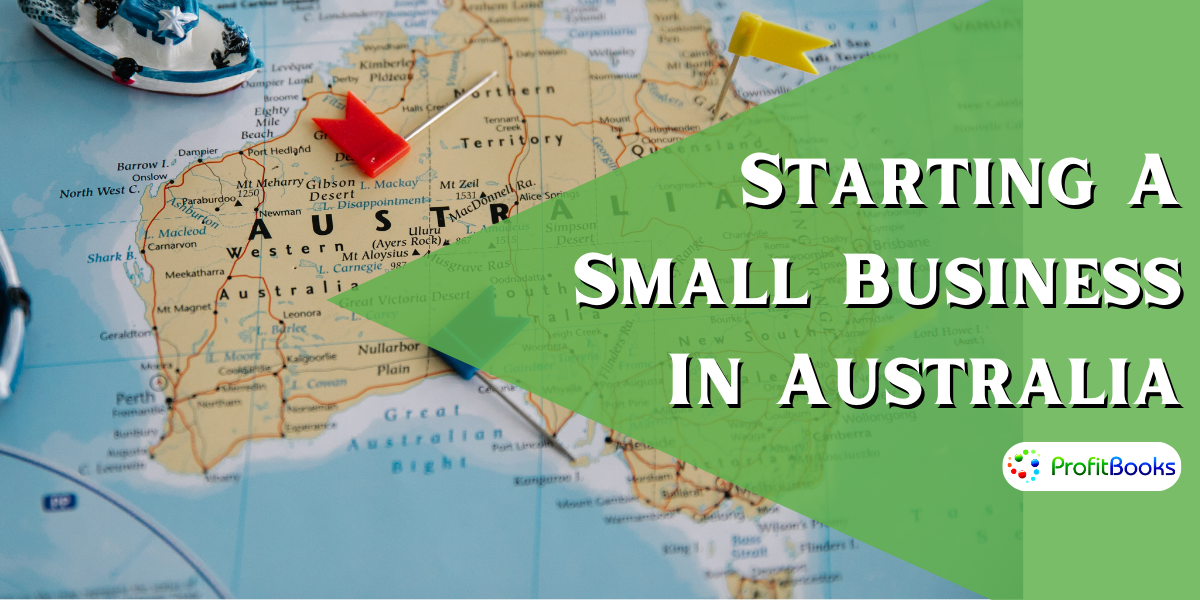
Want to start a small business in Australia?
This guide is all about the things needed to start a business in general, such as your business plan and model. We’ve talked extensively from a legal standpoint about how to start a business in Australia while adhering to the regulations.
Recent data shows that while new business registrations are slightly down from their 2021 peak (291,051 in 2022 compared to 300,666 in 2021), Australia’s entrepreneurial spirit remains strong, with 17.258 new businesses registered per 1,000 working-age people in 2022.
But before you start reading, we’d highly recommend that you go through the small business taxes that you’ll have to take care of in Australia.
We’ve mentioned it all in our guide, which will give you a broad perspective of the legalities regulated by the Australian Taxation Office (ATO).

Things To Consider Before Starting Any Business (not just in Australia)
In this section, we’re going to talk about some really important stuff to think about before you start a business.
These are things that apply no matter where you want to start your business, be it your hometown or somewhere far away.
Think of them as the building blocks for your journey as an entrepreneur.
First, start with your small business idea.
Got a fantastic business idea brewing? Is it a game-changer or just a wild idea?
Here’s the lowdown:
Will it be an online gig, a brick-and-mortar venture, or a bit of both?
What’s the startup cost?
How much green do you reckon you’ll make?
Is there a real hunger for what you’re offering?
Step one is all about checking out the market and the industry where your business will live.
Doing this market research is like figuring out if your business idea is a hit and if folks out there would buy what you’re selling.
You’ll want to set some clear goals for your research and then start collecting info from places like government sources, industry groups, the internet, talking to other business folks, and just chatting with fellow entrepreneurs.
After all this digging, you might find that you need to tweak or rethink how you’re going to bring your business idea to life.
Create a business plan & model.
Creating a business plan is like mapping out your journey in detail. Start by outlining your business goals, target audience, and what makes your product or service stand out. It’s all about planning for success!

Tip 1: Be clear about your mission and vision. What are you aiming for, and what values will guide your business?
Tip 2: Define your market strategy. How will you reach and attract your customers?
Tip 3: Set financial projections and budgets. Knowing your numbers is key to staying on track.
Tip 4: Keep it adaptable. Your plan can change as your business evolves, so be ready to adjust.
Creating a solid business plan helps you stay on course and adapt to the twists and turns of entrepreneurship.
Another striking thing to keep in mind is that you’re not wasting time on this part.
If you find yourself spending too much time crafting your business plan and making it look all fancy with charts and stuff, well, you might be putting off the tough part of starting a business – making money. Don’t dodge the challenge; focus on getting those dollars rolling in.
Choose your business registration type in Australia
Sole Trader
The sole trader structure is the simplest and most common for small businesses in Australia. Key characteristics include:
- Individual ownership and control of the business
- No separation between business and personal assets (unlimited liability)
- Simpler tax arrangements with business income reported on personal tax returns
- Lower setup and compliance costs compared to other structures
- No requirement to register a business name if trading under your exact legal name
According to registration experts I’ve spoken with, approximately 60% of new Australian businesses start as sole traders due to the simplicity and low costs.
However, as Reckon’s business registration guide points out, this structure offers no liability protection.
Partnership
Partnerships involve two or more individuals or entities jointly owning and operating a business:
- Shared responsibility and profits between partners
- Each partner bears unlimited liability for business debts (in general partnerships)
- Governed by a partnership agreement that outlines responsibilities and profit-sharing
- Similar to sole traders, they only need to register a business name if not using their partners’ legal names
- A separate tax file number is required, though income is distributed to individual partners
I’ve noticed that partnerships work exceptionally well for professional services where complementary skills create a stronger offering. Just make sure your partnership agreement is crystal clear about profit distribution and decision-making authority.
Company
A company is a separate legal entity distinct from its owners (shareholders):
- Limited liability protection for shareholders
- More complex regulatory and reporting requirements
- Requires directors, shareholders, and potentially a public officer
- Subject to company tax rates rather than individual income tax
- Must register with the Australian Securities and Investments Commission (ASIC)
- Requires a unique company name
Company registration costs have increased in 2025, with ASIC registration fees now starting at $538, up from previous years.
The upside?
The digital transformation of ASIC’s systems has reduced processing times by 90% through AI-driven compliance checks.
Trust
A trust structure involves a trustee holding business assets on behalf of beneficiaries:
- Offers asset protection and potential tax advantages
- Complex to establish and administer
- Higher setup and ongoing compliance costs
- Requires a formal trust deed
- Often used in combination with a company structure (corporate trustee)
One trend I’ve observed from ProfitBooks users in Australia is that overly complicated trust structures are sometimes unnecessarily recommended to new business owners.
As one business consultant noted on Reddit, “New entrepreneurs waste $3,000-$5,000 on unnecessary trust structures. 73% of single-director PTY LTDs don’t need this complexity.”

If you’d like to know the differences between a company and a sole trader in Australia, then go through our Sole Trader vs Company guide, which we’ve created by keeping the legalities of Australia in mind.
Essential Registration Requirements in Australia
Australian Business Number (ABN)
The ABN is a foundational requirement for most businesses in Australia:
- A unique 11-digit identifier for your business
- Enables you to claim GST credits and avoid PAYG withholding on payments
- Required for business name registration
- Allows you to obtain an Australian domain name
- Not automatically granted – eligibility criteria must be met

To qualify for an ABN, you should:
- Provide goods or services directly to customers
- Source your customers through marketing efforts
- Quote and invoice for work, including setting prices
- Have separate business banking and insurance arrangements
- Report all business income, even if below the tax-free threshold
The Australian Business Register notes that applications are typically processed within 28 days, but I’ve seen significant disparities in processing times between urban and rural businesses.
According to the Latrobe Valley Business Association Survey (2025), 41% of regional businesses report >28-day ABN processing times vs. 7 days in cities.

We have detailed how the Australian Business Number (ABN) works, which you can refer to, if you want to know more about this.
Business Name Registration
If you plan to operate under a name different from your legal name, you must register that business name:
- Registration is through ASIC or the Business Registration Service
- Costs approximately $44 for a one-year registration or $104 for three years
- Must first have an ABN or ABN application reference number
- Doesn’t provide trademark protection or exclusive ownership rights
- Must be renewed every 1-3 years, depending on your registration period
- Cannot be identical to an existing registered business name
When I help Australian entrepreneurs set up their ProfitBooks accounts, I always recommend checking name availability through the ASIC website using their business name search tool before committing to branding and marketing materials.
Tax Registrations
Depending on your circumstances, you may need additional tax registrations:
Goods and Services Tax (GST)
- Mandatory if your annual turnover exceeds $75,000
- Allows you to claim credits for GST paid on business purchases
- Requires quarterly or monthly Business Activity Statements (BAS)
Managing GST compliance is much easier with accounting software. I’ve built ProfitBooks with specific GST features for Australian businesses, including automated GST calculations and BAS report generation.
Pay As You Go (PAYG) Withholding
- Required if you employ staff
- Mandates withholding tax from employee wages and reporting to the ATO
Fringe Benefits Tax (FBT)
- Applies if you provide non-cash benefits to employees
- Includes benefits such as company cars, private health insurance, and entertainment
Here’s the deal: before you dive into starting your small business, it’s a smart move to get a pro to check out all the legal stuff.
Why?
Well, the way you set up your business affects all the rules and regulations you gotta follow.
Getting professional advice and handling these legalities upfront can save you a lot of headaches down the road.
Step-by-Step Business Registration Process in Australia
Step 1: Choose Your Business Structure
Carefully evaluate the different business structures based on:
- Tax implications
- Liability considerations
- Future growth plans
- Management preferences
- Setup and ongoing costs

It’s worth consulting with an accountant for this decision. I’ve seen too many businesses struggle to change structures later when they outgrow their initial choice.
Step 2: Select and Check Business Name Availability
Before registering:
- Check the ASIC register to ensure your preferred name is available
- Consider trademark searches to avoid intellectual property conflicts
- Ensure the name complies with ASIC naming guidelines (e.g., no restricted words)
Smart business owners I’ve worked with often secure their business name, domain name, and social media handles simultaneously to maintain brand consistency.
Step 3: Obtain an ABN
Apply through the Australian Business Register:
- Complete the online application at abr.gov.au

Australian Business Register (ABR) Home Page
- Provide details about your business activities and structure
- Be prepared to verify your identity
- Applications are typically processed within 28 days

A tip from my experience: have all your identification documents ready when you apply. Incomplete applications are the number one reason for processing delays.
Step 4: Register Your Business Name
Once you have an ABN:
- Complete the business name registration through ASIC Connect or the Business Registration Service
- Pay the registration fee
- Receive your Record of Registration and ASIC key for future transactions.
Step 5: Register for Relevant Taxes
Based on your business activities:
- Register for GST if required
- Set up PAYG withholding if employing staff
- Register for other applicable taxes such as FBT, LCT, or WET
Step 6: Additional Registrations and Licensing
Industry-specific requirements may include:
- Occupational licenses and permits
- Local council approvals, especially for home-based businesses
- Industry-specific registrations (e.g., food handling, child care)
Digital Transformation & Cybersecurity
ASIC’s RegistryConnect Program
The Australian Government’s 2025-26 Budget has allocated $287 million to ASIC’s RegistryConnect initiative, accelerating the modernization of business registers. Key features include:
- Integrated Company/Business Name Search: New search functionality combining company details with linked Director IDs and business name registrations
- Real-Time Registration: 90% reduction in processing times for new company registrations through automated compliance checks
- Enhanced Security: Multi-factor authentication and blockchain-based verification for all registry transactions.
- Fraud Prevention: AI-driven anomaly detection reduces business identity theft by 62% compared to 2023 levels
For example, companies such as Cymulate support this by testing and validating SIEM correlation rules to improve threat detection and response effectiveness.
According to ASIC Commissioner John Price, “Businesses complete 78% of registrations without human intervention via our virtual assistant,” which has dramatically improved efficiency.

Cyber Security Act 2024 Requirements
Australia’s first standalone cybersecurity legislation introduces critical obligations:
- Ransomware Reporting: Businesses with >$3M turnover must report payments within 72 hours (penalties up to $18,780)
- Smart Device Standards: Mandatory security certifications for IoT devices sold in Australia from March 2026
- Incident Review Board: Establishes forensic analysis support for businesses facing major breaches
- Limited Use Obligations: Protects businesses sharing breach details with the government from regulatory actions
As a software provider, I’ve invested heavily in making ProfitBooks compliant with these new regulations to protect our Australian users’ data.
The 2024 Cyber Security Act’s 20% tax boost has led to 62% of small businesses adopting multi-factor authentication, which we now provide as a standard feature.

Last But Not Least: Get Your Finances In Order
When you’re just starting your business, you’ll probably spend more money than you make, so you might not be in the green for a while.
But don’t worry, it’s normal – we’ve all been through that phase.
To make your dream of starting a business in Australia come true, it’s important to figure out how much money you’ll need to keep things going until you start making a profit.
Alright, let’s talk money!
You need to figure out all the costs of getting your business started and keeping it going. It’s got to be more than what it takes just to keep the lights on.
Tip 1: Look at what other businesses in your field spend. That’ll give you a good idea of what you’ll need.
Tip 2: Decide how much cash you need to kickstart your business. You can get it from loans, friends and family, or your savings.
Once you’re in business:
Tip 3: Make sure you send out your bills correctly and keep track of what’s coming in and going out.
Tip 4: Keep an eye on your profits and losses. If things aren’t adding up, you might need to tweak your budget or change your game plan.
Tip 5: There are handy tools like ProfitBooks and Xero that can help you with all this number stuff. They’ll make your life easier.

Frequently Asked Questions
- Do I need to register a business name?
You only need to register a business name if you conduct business under a name other than your full legal name. If you’re a sole trader operating under your exact first and last name, registration isn’t required.
- How do I check if my preferred business name is available?
You can check name availability through the ASIC website using their business name search tool or through the Business Registration Service.
- What’s the difference between a business name and a company?
A business name is simply the name under which you trade, while a company is a distinct legal entity with its rights and obligations, separate from its owners. Registering a business name doesn’t create a separate legal entity.
- What is an ABN, and do I need one?
An ABN (Australian Business Number) is a unique 11-digit identifier for your business. You generally need one if you’re running a business, to claim GST credits, and to avoid PAYG tax being withheld from payments made to you.
- How much does it cost to register a business?
Business name registration costs approximately $44 for one year or $104 for three years. Company registration fees are higher, starting at around $538 in 2025.
- Do I need to form a company to start a business?
No, you don’t have to form a company. Most businesses start as sole traders, which is simpler and has lower compliance requirements. You can progress to other structures as your business grows.
- When do I need to register for GST?
You must register for GST if your annual turnover is $75,000 or more (or $150,000 for non-profit organizations). You can also register voluntarily if your turnover is below these thresholds.
- Can I run a business from home in Australia?
Yes, many small businesses operate from home. However, you should check with your local council about zoning or planning permissions. Some home businesses that meet certain criteria may be exempt from development approval.
- What is a Director ID?
Unique 15-digit identifier required for all company directors under the Modernising Business Registers (MBR) Program. It’s part of improved governance and transparency measures.
- How does digital registration affect processing times?
ASIC’s automated systems now process 93% of standard registrations within 2 hours vs. 28-day manual processing. This is thanks to the RegistryConnect digital transformation program.
- What cybersecurity measures are mandatory post-registration?
All companies must implement multi-factor authentication, encrypted backups, and annual staff training under the Cyber Security Act 2024 requirements.
- What hidden costs should I be aware of when starting a business?
Post-registration expenses like cybersecurity compliance ($ 1.2 K-$4.5 K/year) and digital tax automation ($880-$2.5K) surprise 68% of new businesses. Only 22% budget ais allocated dequately upfront.
Conclusion
In the exciting world of entrepreneurship, the journey to starting and growing your small business is an adventure filled with challenges and rewards. Whether you’re considering launching your venture in Australia or anywhere else, remember that the key ingredients for success remain universal.
From crafting a solid business plan to navigating the legalities and keeping a close eye on your finances, you’ve gained valuable insights to kickstart your entrepreneurial journey.
So, here’s to your entrepreneurial spirit, innovation, and determination. Embrace the journey with confidence and enthusiasm, and may your small business flourish and thrive in the dynamic world of commerce!
But when the money starts coming in from your small business in Australia, you must have a handy tool to manage it. ProfitBooks is the best free solution to this problem, as we not only have a powerful bookkeeping system, but we’re also a cloud accounting software, so ProfitBooks travels with your business.
Get your 100% free account now!
Also Read:
Sole Trader vs Company: What Are The Key Differences?