
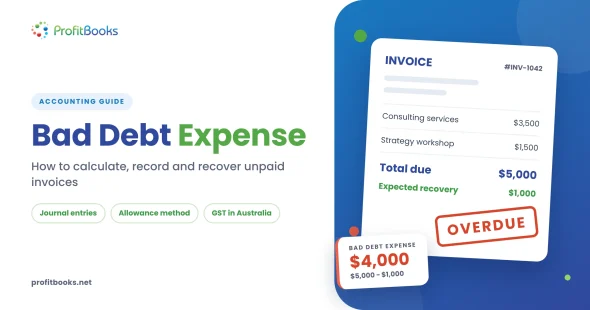
Bad debt expense: how to calculate, record and recover unpaid invoices

Bad debt expense: how to calculate, record and recover unpaid invoices

You delivered the work, sent the invoice and recorded the revenue. Three months later, the customer has gone quiet, and the accounts receivable balance on your books looks less like an asset every week. Bad debt expense is the accounting mechanism that corrects your financial statements when an invoice moves from “they’ll pay eventually” to…
What Is Business Activity Statement (BAS) In Australia & How To Lodge It?

What Is Business Activity Statement (BAS) In Australia & How To Lodge It?

If you’re running a business in Australia, you’ve probably heard of the Business Activity Statement, or BAS for short. It’s not just another piece of bureaucratic jargon; it’s a crucial part of managing your finances. BAS is like a financial report card that Aussie businesses must submit regularly to the Australian Taxation Office (ATO). In…

Payroll Tax, Regulations And Process In Australia

Payroll Tax, Regulations And Process In Australia

Payroll in general refers to the process of managing employee compensation, including calculating wages, deducting taxes, and distributing payments, usually on a regular schedule, like biweekly or monthly. In Australia, there are certain payroll rules and regulations and a special tax asserted by the Australian Taxation Office (ATO). Australia’s thriving economy and welcoming business atmosphere…

CGT vs GST In Australia - What’s The Difference

CGT vs GST: How Do They Differ In Australia?

As the co-founder of ProfitBooks, I’ve had the privilege of working with countless Australian business owners over the years. Through these relationships, I’ve gained deep insights into the Australian taxation system and its impact on businesses of all sizes. Two taxes that consistently generate questions from our Australian users are Capital Gains Tax (CGT) and…